Operations | Monitoring | ITSM | DevOps | Cloud

The latest News and Information on DevOps, CI/CD, Automation and related technologies.

Introduction to Confidential Computing

Public clouds are great! Yet, many users are still reluctant towards moving their security-sensitive workloads away from their private data centers and into the public cloud, due to a set of security concerns. To address these challenges, what we need is a way to perform a privacy-preserving computation that can protect the confidentiality and integrity of your workload. Confidential computing achieves this by running your workload in a hardware-encrypted execution environment, that is isolated from the cloud provider’s privileged system software (e.g. hypervisor, host OS, and firmware), as well as its employees.


7 Ways to Accelerate Cloud Native Development

Modern enterprises understand the need to move away from developing monolithic applications to ones that make best use of the cloud to enable business acceleration at scale and speed. That means transforming development to more resilient cloud native architectures that can be readily deployed to cloud, multi-cloud, and hybrid environments. What does it mean to be cloud native?

IPv4 vs IPv6 - What are the Differences?

An IP (Internet Protocol) address is a numerical label which is used for addressing he location and identification of the network interface for the devices connected to the computer network. The most used and popular IP version is IPv4 which uses 32-bit for IP addresses. Since the IPv4 became popular and the IPv4 addresses are getting depleted, Ipv6 is now used which uses 128-bit for the IP addresses.

Verify image signatures with GitHub Actions and KeylessPrefix

With the latest releases of Kubewarden v1.1.0 and the verify-image-signatures policy, it’s now possible to use GithubActions or KeylessPrefix for verifying images. Read our previous blog post if you want to learn more about how to verify container images with Sigstore using Kubewarden.

6 Best Practices to Create a Data Center Naming Convention

Naming conventions for assets have a rich, engaging, and often hilarious history. While recently organizations have switched to standardized and more informative naming conventions based on location and function, earlier (and even now) IT departments have had a lot of fun naming assets for their data centers and servers. IT departments have often showcased their inner geek by using names of Star Wars or Star Trek characters for their assets.

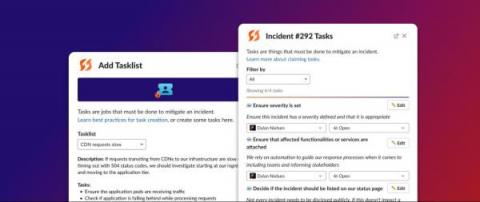
FireHydrant Tasks provide turn-by-turn navigation during an incident

An incident has been declared and your runbook has fired. Everyone is gathered in your Slack channel, the tickets are opened, and roles are assigned. Now what? This is when most teams manually update status pages and kickoff investigation streams using a patchwork of tribal knowledge and supporting playbook documents.