Operations | Monitoring | ITSM | DevOps | Cloud

The latest News and Information on Cloud monitoring, security and related technologies.

Why is AI so expensive? The real cost drivers of AI

AI is expensive because the model bill is only part of the cost. Three components set the floor: model subscriptions, per-token API pricing, and infrastructure. Three more make it move: adapting models to your business, catching and fixing errors, and rising energy and datacenter costs. Efficiency doesn't fix it, because cheaper AI gets used more, not less. Businesses are willing to spend on AI. Research from Deloitte found that in 2025, 85% of organizations increased their AI investments.


Shared context for AI coding agents beats better tooling

The instinct when adopting AI coding agents is to optimize the agent. Compare models, tune prompts, argue about which editor has the better completion, and treat the agent as the thing that determines how fast the team moves. Then the commits go up and the product does not. The team building Upsun Dispatch took a different route, and the result is worth copying. They did not find a better agent.

Shipped: Monthly cost comparison in Explorer gets a glow up

Months have different numbers of days, and a monthly cost chart built on raw totals mixes that calendar difference into the trend. A 28-day February next to a 31-day March shows a 10.7% increase even when daily spend never moved. The same math works in reverse: real growth in a short month can look flat, hiding an increase worth investigating. That costs you time in two places. The first is triage.

AI budgeting: how to plan and forecast AI spend

AI budgeting is the process of planning, allocating, and forecasting an organization's AI spend: model and API costs, AI infrastructure, tooling, and the people running it all. It differs from traditional budgeting because AI spend is usage-based, scales with product success rather than headcount, and often spans multiple providers.

Sharing GPUs without Flying Blind: Kubernetes Patterns for AI Inference

GPU sharing is quickly becoming a practical requirement for Kubernetes-based AI inference, as many modern workloads don’t need a full GPU to deliver value. But safely placing multiple containers on the same accelerator brings new challenges: scheduling, fairness, isolation, observability, and noisy-neighbor behavior. This 20 min session explore the GPU sharing landscape across Kubernetes: time-slicing, MPS, MIG, KAI Scheduler, and HAMi, and dives into the harder problem: operating shared GPUs in production, from tracking usage to enforcing fairness as demand shifts.

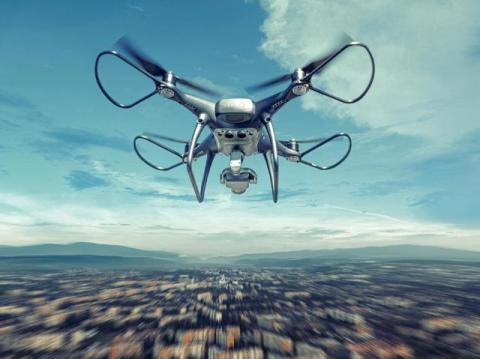
Building an End-to-End Drone Ecosystem: The Technologies That Need to Work Together

Commercial drone technology is rarely a single application running alongside an aircraft. A complete solution may include flight software, onboard sensors, telemetry, cloud infrastructure, web and mobile interfaces, data processing pipelines, analytics tools, and integrations with existing business systems.

How to build the business case for AI

A strong AI business case ties a specific goal to a measured outcome and a fully-loaded cost. Most fail because they skip one of the three: no clear mandate, an over-broad "AI fixes everything" scope, or a cost estimate that ignores adaptation and error-correction. Build it in six steps: define goals, identify uses, break work into tasks, evaluate models, assess total cost, then launch and refine. Most companies are now spending on AI. Far fewer can show what they got back.

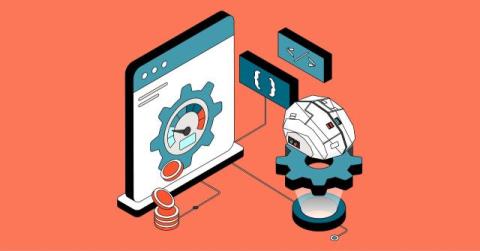
How to right-size your existing Claude skills

You shipped a skill. It worked. You closed the tab. That’s the whole problem. Model choice is a decision you make once, at the moment you’re least equipped to make it: before the skill is even authored. Then you never revisit it, because the skill stopped being interesting the day you got it working. So go back and check. Here’s how.

JFrog Artifactory Now Integrates Natively with Artifact Registry in Google Cloud

Teams running containerized workloads on Google Cloud have long relied on JFrog as their single source of truth for container images. The missing piece has been getting Google Cloud’s own runtime services — like Cloud Run and Google Kubernetes Engine (GKE) — to pull directly from JFrog for every container image pull. I’m happy to say that the gap is now closed. Artifact Registry in Google Cloud has introduced a new repository mode called Connector that addresses this requirement.

Peak Cloud: Decentralising for resilience

For more than a decade, the prevailing wisdom in enterprise IT was simple: move everything to the public cloud. Hyperscale platforms promised unlimited scalability, lower costs, agility and freedom from the burdens of managing infrastructure. Cloud-first has been rapidly gaining momentum as the de facto path to a modern digital footprint. Until now.