Operations | Monitoring | ITSM | DevOps | Cloud

What Four Leadership Circles Revealed About Operationalizing DEX

Earlier this year, I spent time with technology leaders across four major cities – San Diego, Boston, London and Dallas, as part of four Leadership Circles. Taken together, the conversations reinforced how far digital employee experience has matured for many organizations. The focus has shifted from understanding why DEX matters to exploring what it takes to operationalize its success. San Diego focused on the changing role of IT and the strategic case for DEXOps.
Configure Your JFrog Curation Service

Learn how to configure the JFrog Curation service for the first time. This video walks through each setting on the Curation General page, including turning on Curation, connecting package types, compliant version selection and notifications, and explains what each one does. Creating Curation policies and advanced coverage are covered in separate videos. Read more about it in JFrog Docs.

Create a Legal Risk Policy in JFrog Curation

Protect your proprietary code with JFrog Curation! Learn how to create a legal risk policy that blocks packages with licenses you don’t want developers using. In this demo, we build a policy for the GNU AGPL license, add a waiver for a package covered by a commercial license, and configure how waiver requests are handled. Read more about it in the JFrog Docs.

Create an Operational Risk Policy in JFrog Curation

Protect your organization from the next software package hijacking with JFrog Curation! Learn how to create an operational risk policy in JFrog Curation that flags immature package versions. This walkthrough reviews the available operational risk conditions, explains why brand-new or outdated releases can carry supply chain risk, and shows how a Dry Run action lets you measure a policy's impact on developers before you switch it to Block.

Demo: New Loom for Mac Desktop App

Introducing the all-new Loom Desktop app for Mac. About Atlassian: Behind every great human achievement, there is a team. From medicine and space travel to disaster response and pizza deliveries, we help teams all over the planet advance humanity through the power of software. Our mission is to help unleash the potential of every team.

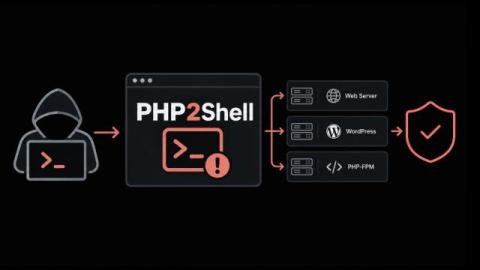
How to Patch PHP2Shell Across Every Server and Prove Each Fix to Auditors

When a critical flaw surfaces in the language behind a large share of your web applications, how quickly can your organization name every server that runs it? PHP2Shell puts that question in front of every IT leader who runs PHP. The answer decides how long the business stays exposed. Here's the short version. PHP2Shell covers two flaws in the PHP engine, and either one lets an attacker run code on a web server with no login at all.

VMware Monitoring: Why Opslogix continues to be the right choice for you

In December 2021 we wrote VMware Monitoring: Why Opslogix is the right choice for you. At the time, vSphere 7 was new, Kubernetes was coming to vSphere, and the Log4j vulnerability was in the news. A lot has changed since then. vSphere 9 and SCOM 2025 are here, ransomware gangs now target ESXi hosts directly, and many organizations are reconsidering how they monitor their VMware estate.

Should you use a log or a metric?

Since Sentry added Logs and Application Metrics, there are now two ways to record that something happened in your app, and they can look pretty similar: Sentry.logger.info("user.signup") versus Sentry.metrics.count("user.signup"). Both store attributes, both include shared context automatically, and both can be filtered, grouped, and counted. So when you’re instrumenting your code, which one do you reach for?