Operations | Monitoring | ITSM | DevOps | Cloud

The Binance Breach Wasn't a Crypto Failure: It Was a Trust Failure

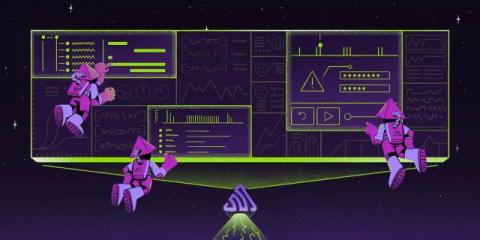
Explore how the $6.36B Binance breach exposed critical gaps in identity, DevOps, and signing security - and what engineering teams can learn from it. The October 29, 2026 theft from Binance is best read as a failure of identity and release-path trust, not a failure of cryptography. Binance's early findings point to a compromised DevOps engineer's laptop that gave an attacker a route into a service container and the ability to submit unauthorized withdrawals.
How to Capitalize AI Spend Without the Gray Area

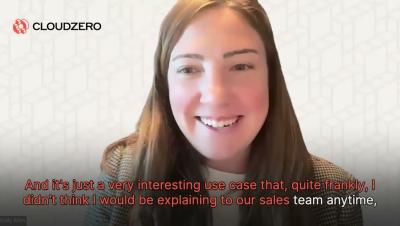
In this video, Emily Allen, Director, Finance & Accounting at CloudZero, explains why AI capitalization is still unclear for most finance teams, and how CloudZero gives them a repeatable approach. As AI writes more of the code, finance needs to know which AI spend went to qualifying development work and which should be expensed. CloudZero records which project each AI coding session served, what kind of work it was, and what it cost, so finance has the evidence behind every decision.

The $600 AI Cap That Sent Employees Golfing

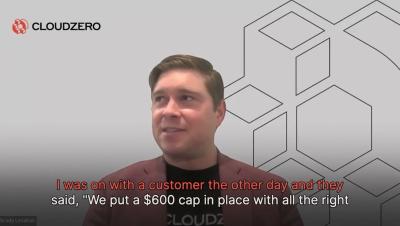
In this video, Brady Lenahan, VP of Sales at CloudZero, shares what he’s hearing from customers when the cap hits before the month ends: employees who’ve built their workflows around AI stop working productively and wait for next month. Some go golfing, some clean the garage. Either way, finance loses both the productivity and the visibility. There’s a better option than capping AI spend you can’t see.

AI Is Forcing Finance to Redefine KPIs

AI Budgeting for Finance: Last Year vs. Now In this video, Emily Allen, Director, Finance & Accounting at CloudZero, explains how AI planning changed in a single year. Instead of starting from a vendor commit or the current run rate, she’s treating AI spend as its own category and analyzing it bottom-up. That opens a new question for finance: “What does good look like?” With a year of data, finance teams can start benchmarking AI spend over time and check whether what they approved actually paid off.

What happened when we gave $10k worth of data to 5 observability platforms | Live Laugh Logs

We gave $10k worth of data to five different observability platforms. Which agent finds the true answer? In the first episode of our benchmarks series, Chris and Annie walk through how an agent performed on Coralogix, Datadog, New Relic, Dynatrace and Grafana Cloud across 10 injected incidents. They also explain why sampled data makes agents "hallucinate the gap". Subscribe to our channel for more benchmarks and insights into observability and AI.

IT Operations Management Software: How to Choose the Right Solution

A monitoring dashboard can tell you a server is down. It may not tell you which services depend on it, what changed before the failure, or who should take the next step. Those gaps between systems, people, and processes are often what makes day-to-day IT operations difficult to manage. IT operations management software can help close those gaps, but the label covers very different kinds of products.

6 Best EHR Systems for Small Practices (compared): From Patient Records to Connected Care

For a small practice, choosing an electronic health record system affects nearly every part of the working day: documenting visits, prescribing medications, reviewing results, scheduling appointments, and submitting claims. The right choice should fit your clinical specialty and the way your team operates.

Android profiling now uses Perfetto via ProfilingManager

Starting with Sentry Android SDK 8.51.0, profiling on Android 15+ devices is powered by Perfetto, through Android’s system ProfilingManager API. That means fewer legacy tracer crashes, lower CPU and memory overhead, and more representative profiles. You don’t need to change any configuration: if you already use continuous profiling, devices on Android 15 and newer pick up the new profiler as soon as you upgrade.

What is Agentic IT Operations (Agentic ITOps?)

Agentic IT operations (Agentic ITOps) deploy autonomous AI agents that can perceive, reason, plan, and act to investigate incidents, coordinate people, and improve with every incident they touch. Think of it as the next step in a progression, where monitoring surfaced the symptoms, AIOps separated signal from noise, and Agentic ITOps takes action on what it finds.