Operations | Monitoring | ITSM | DevOps | Cloud

The latest News and Information on Service Reliability Engineering and related technologies.

What is a Security Operation Center and how do SOC teams work?

With the growing complexity of IT environments, it is essential to have robust security processes that can safeguard IT environments from cyber threats. In this blog, we will explore how security operation centers (SOCs), help you monitor, identify and prevent cyber threats to safeguard your IT environments. This blog covers the following pointers.

What are the four Golden Signals?

When it comes to building reliable and scalable software, few organizations have as much authority and expertise as Google. Their Site Reliability Engineering Handbook, first published in 2016, details their practices to maintain reliability as Google scaled. But when you have over a million servers running thousands of services across more than twenty data centers, how do you monitor them in a consistent, logical, and relevant way?

How to add a Golden Signal to a service in Gremlin RM

In this video, we show you how to add a Golden Signal to a service. Gremlin uses your Golden Signals to ensure your services are still healthy and responsive during reliability tests. You can configure Golden Signals to use an existing monitor in your observability tools, such as Datadog, New Relic, or Prometheus. We recommend adding all four Golden Signals to each of your services to ensure comprehensive coverage.

Round Robin Escalation: An Efficient Way to Distribute On-Call Responsibilities

Nowadays, organizations address a high volume of incidents everyday. With so much happening, responders can be overwhelmed by the volume of incidents and may end up de-prioritizing certain important incidents. Hence, it is important to have an efficient on-call scheduling and escalation process in place. In this blog, we will explore how Round Robin Escalations can help distribute on-call load and set up efficient on-call schedules. This blog covers the following pointers.

The SRE's Quick Guide to Kubectl Logs

Logs are key to monitoring the performance of your applications. Kubernetes offers a command line tool for interacting with the control plane of a Kubernetes cluster called Kubectl. This tool allows debugging, monitoring, and, most importantly, logging capabilities. There are many great tools for SREs. However, Kubernetes supports Site Reliability Engineering principles through its capacity to standardize the definition, architecture, and orchestration of containerized applications.

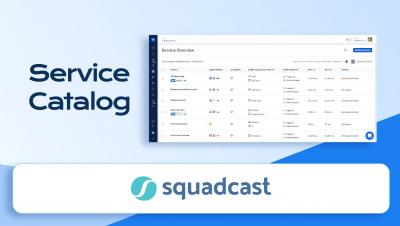
Introduction to Service Catalog | Service Ownership | Service Classification Squadcast

To make service management a breeze, we bring to you our improved Service Catalog. The Service Catalog is designed to improve Service Classification and bring more transparency to Service Ownership within your org. This video explains how a consolidated summary of all active services from a single dashboard can help you better track your service health.

SRE vs. DevOps: Differences and Similarities

Organizations scramble to adopt new frameworks and methodologies to make the software more scalable. Plus, they need to do it in a reliable way that doesn’t cause more problems. Enter Site Reliability Engineering (SRE), a set of practices introduced by a Google engineer. But how does it stack up to frameworks like DevOps? DevOps and SRE both enhance the software development and product release cycle.

Healthchecks + Squadcast Integration: Routing Alerts Made Easy

Healthchecks is a cron job monitoring service which listens to HTTP requests and email messages ("pings") from your cron jobs and scheduled tasks ("checks"). It lets you update your job to send an HTTP request to the ping URL every time the job runs. When your job does not ping Healthchecks.io on time, then you will receive an alert! If you use Healthchecks for your monitoring needs, you can now integrate it with Squadcast to route detailed alerts from Healthchecks to the right users in Squadcast.