Operations | Monitoring | ITSM | DevOps | Cloud

Building AI SRE Agents, Part 1: Start Local, Break Things, Learn Fast

The first stage of AI SRE maturity is a laptop, a throwaway cluster, and zero production access. Here’s how to set it up, and what to watch for. AI SRE (Site Reliability Engineering) agents are AI-powered systems that automate the most time-consuming parts of incident response: triaging alerts, correlating logs and metrics, generating root-cause hypotheses, and proposing remediation steps.

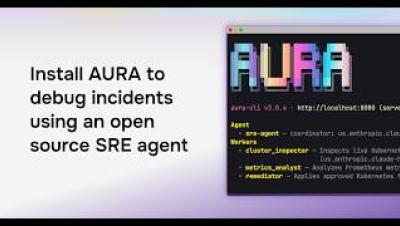
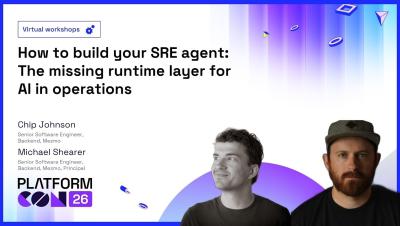
Build an SRE Agent Harness for AIOps Without Context Blowout

An agent harness for AIOps is the runtime layer that coding agents like Claude Code were never built to provide: context isolation, decision traceability, and gated execution for tools that touch production. Aura is Mezmo's open-source (Apache 2.0) agent harness, purpose-built for operations work rather than software development.

They stopped shipping features for half a year, now they're thriving

When incidents pile up fast enough, every part of the company bleeds: support is fielding angry customers, AEs are on apology calls, and engineering is burning cycles on retrospectives instead of shipping. For Eran Kampf (VP of Engineering at Twingate, Co-founder Monday.com) where the product is the network, that was the moment he made a call most engineering leaders won't: stop all feature work for a quarter and fix reliability.

How SRE Practices Improve Trust in Digital Finance and Healthcare Platforms

Trust used to be a brand problem. Now it's an uptime problem, a latency problem, a data integrity problem, and sometimes a "why is the payment button spinning again?" problem. For digital finance and healthcare platforms, users don't separate the service from the system behind it. If the app fails, the business feels careless. If records lag, confidence drops. If a transaction disappears for even a few seconds, panic arrives fast.

Could vs. Should: The First Year Managing an SRE Team

As of today, I’ve drafted this post upwards of 10 times – it’s old enough that the version I first started working on was called “Reflections on 1 Year of SRE Management” (I’m currently at 2.5 years). But everything I learned during that first year became critical for the next.