DX Unified Infrastructure Management 20 4 Service Level Management
This video summarizes the Service Level Management capability of DX UIM 20.4


The latest News and Information on Monitoring for Websites, Applications, APIs, Infrastructure, and other technologies.
Lots of organizations do not pay attention to their assets and pieces of equipment, who is using them and where are they located. These are particularly important questions but usually, they are ignored as a result assets are lost and nowhere to be found when they are required. Lots of employees waste their time finding the required assets and pieces of equipment. It also leads to delayed production work. Overall, the top line and bottom line suffer.
When it comes to IT, you can’t do anything with an asset you can’t see. When it comes to your networking, monitoring offers the eyeballs to know what is going on. But IT and network pros don’t spend all day staring at a dashboard waiting for something to happen. Like your local police department, they rely on notifications of trouble. Instead of 911 calls, IT depends on network alerts.
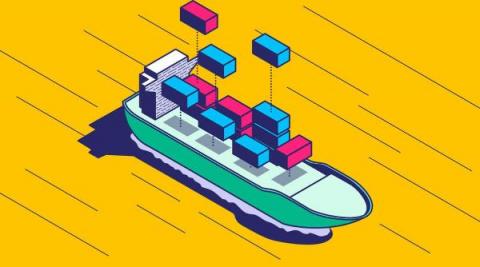
If you’re involved in IT, you’ve likely come across the word “Kubernetes.” It’s a Greek word that means “boat.” It’s one of the most exciting developments in cloud-native hosting in years. Kubernetes has unlocked a new universe of reliability, scalability, and observability, changing how organizations behave and redefining what’s possible. But what exactly is it?
Over the years, I found that building out monitoring scripts and using them properly has proven to be a challenge. When I look back at my internal IT days using platforms like Whatsupgold, PRTG, or N-central, the question always remained the same: how can I monitor efficiently and get alerts that matter? In this blog post, I thought I’d tackle something that is a challenge for a lot of people: monitoring Hypervisors.
The same concept holds true for AIOps, which needs a steady diet of data to feed the analytics that drive key functions like diagnostics and automation that can turn your IT operations team into AIOps champions.
By now it’s no secret that system outages and website downtime are more widespread and frequent than ever. In fact, the frequency of outages jumped 9% in just the first week of 2022. This can be attributed to a rapid increase in traffic and reliance on tech infrastructures – resulting in connectivity, server, and other technical issues that are alternately unforeseen and unavoidable.