Operations | Monitoring | ITSM | DevOps | Cloud

Next-Generation Apple CarPlay: iOS 26's Real Limit

iOS 26 turned CarPlay widgets from a 2022 promise into a shipping surface. What you actually see, though, is decided by your car - not your iPhone. Most head units render one or two widget stacks; three arrived only on the largest screens with iOS 26.2 in December 2025. That one constraint drives every decision below. iOS 26 puts a widget stack next to the map - but how many stacks you get is set by the head unit, not the phone.
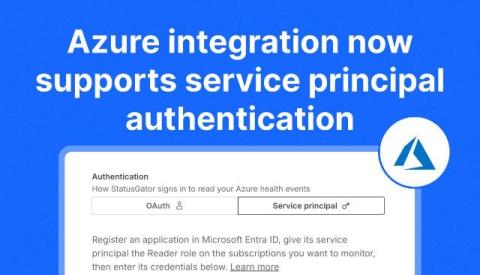
Azure integration now supports service principal authentication

We’ve released some improvements to our Azure status integration. StatusGator can now read your Azure Resource Health events via a service principal. Previously the only supported authentication mechanism was OAuth. Both pull the same data and produce the same alerts – the difference is who the connection belongs to, and what happens to it over time.

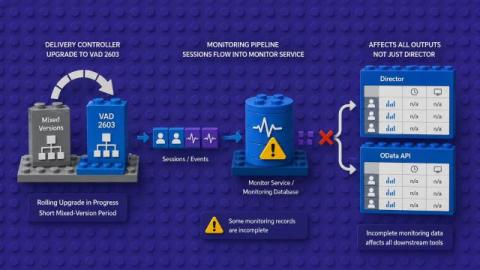
Notes from the Field: Incomplete Monitoring Data After Upgrading to Citrix VAD 2603

As part of our EUC Managed Support & Consultancy Services, we regularly test new Citrix releases and investigate changes that could impact the environments we support. While upgrading a Citrix Virtual Apps and Desktops site to version 2603 in our lab, we noticed unexpected behavior in Citrix Director. After completing the upgrade, the Connections overview showed incomplete session information.

Compliance Doesn't Fail on Audit Day. It Drifts Every Day in Between.

For CIOs, compliance is no longer simply a box to check at audit time. It has become part of the operating standard for resilient, accountable, and well-managed enterprise IT. The reason is straightforward: enterprise technology environments change continuously. Infrastructure scales. Configurations change. Cloud resources move. Exceptions accumulate. Dependencies evolve across hybrid and distributed architectures.

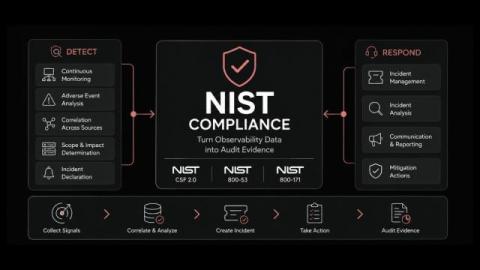
How NIST Compliance Turns Observability Data Into Audit Evidence

Can you prove, on demand, which production systems were under continuous monitoring last quarter? Buyers, auditors, and insurers all ask a version of that question, and the answer decides contracts as often as audit findings. NIST compliance means aligning security controls and operations with standards from the National Institute of Standards and Technology, then holding evidence that the alignment stayed continuous. The frameworks are precise about outcomes and quiet about mechanics.

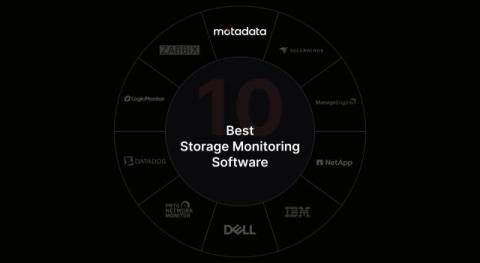
Best Storage Monitoring Software: 10 Tools Compared

Storage rarely fails loudly. A pool fills. Latency climbs on one LUN. The first to notice is a user whose application timed out. The best storage monitoring software catches it earlier. It watches capacity, IOPS, latency and drive health across your arrays, which is what storage resource monitoring is for. In this blog, you will see: By the end you will know which one fits. Storage monitoring software tracks the health, capacity and performance of your IT storage.

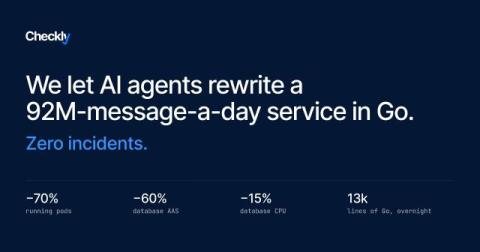
We Let AI Agents Rewrite a 92M-Message-a-Day Service in Go. Zero Incidents.

Our Results Daemon processes about 92 million messages a day. We recently rewrote it from Node.js to Go, and we let Claude Code write it. We wanted to know whether we could trust an agentic rewrite for a critical, high-throughput production service rather than a prototype. It shipped with zero incidents, a 70% reduction in running pods, and a lighter database load.

AI in the public sector (infrastructure challenges and solutions)

The U.S. government has cataloged over 1,700 active AI use cases, and nearly 90% of federal agencies are already using or planning to use AI. The European Commission has disclosed nearly 1,500 AI use cases across EU member states. With over 3,200 combined AI use cases cataloged across the US and EU, public sector IT leaders face an identical roadblock: traditional application delivery controllers were not designed to parse or throttle Layer 7 LLM payloads, leading to backend GPU exhaustion.

Major Incident Management: A Playbook for I&O Teams

It's 2 a.m. Monitoring alerts are firing, the on-call engineer is being paged, and customer reports are arriving faster than anyone can triage them. A bridge call opens. Infrastructure, network, application, and service desk teams hop on with different fragments of context. Meanwhile, executives want to know the scope, customer impact, and expected recovery time. This is not the moment to decide who is in command or how often updates should go out.