Operations | Monitoring | ITSM | DevOps | Cloud

What Every Business Should Know About Modern Marketing

Picture a business that switches off its ad budget on a Friday. By the following week the leads have dried up, the traffic has flatlined, and the pipeline is empty as if the company had never marketed at all. Now picture a competitor that pauses the same spend and barely notices, because the phone keeps ringing from work done months ago.


How Digital Tools Are Changing the Way Facts Are Verified

A convincing screenshot, video clip or statistic can now travel across the internet before anyone has established where it came from. The response is changing too. Verification is becoming less about finding a page that agrees with a claim and more about reconstructing its origin, checking its digital traces and comparing several independent signals before deciding how much confidence it deserves.

The End of Browsing: How AI Is Rewriting Digital Discovery

Sometime in 2025, a quiet threshold was crossed: the majority of Google searches in the United States began ending without a single click. Data from SparkToro and Similarweb puts roughly 58.5% of US searches as resolving on the results page itself, and for news queries the zero-click rate climbed from 56% to 69% in a single year. The search box still works the way it always has. What changed is that we've stopped leaving it.

Why More Technology Is Becoming a Service Instead of a Product

A growing number of technology purchases no longer end at checkout. A phone gains new AI features months after launch, a vehicle receives software updates from the cloud, and a security camera may lose important functions if its online service disappears. The physical product still matters, but increasingly it is only the visible edge of a much larger system.
Sponsored Post

Eliminate Data Transfer Fees from Your AWS Log Costs

As businesses generate, capture, and seek to analyze more data than ever before, they often find themselves limited by high data storage costs, expensive data processing fees, and high management overhead. For organizations who wish to expand their log analytics programs and become more data-driven, maximizing cost efficiency has become a critical operational objective.
Sponsored Post

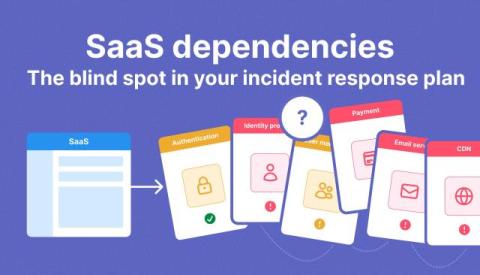
SaaS dependencies: the blind spot in your Incident response plan

So let's talk about the incidents that weren't yours to fix. It's 12:26 UTC on August 14, 2026. Outbound email starts bouncing. Inbound messages from partners stop arriving. Your team checks the obvious things first: mail server logs, recent deploys, firewall rules, your own DNS zone records. Everything on your side looks clean. By 12:48 UTC, an Early Warning Signal by StatusGator has already flagged a spike in reports pointing at Proofpoint. But if you're not watching for that signal, you don't know it exists yet.

Fin's CTO on Building Great Engineering Organizations in the AI Era

A few months ago, Darragh Curran, CTO at Fin (formerly Intercom) set a public goal to double engineering productivity and nearly tripled it instead. They did so by pulling a few levers: AI writing code at scale, building an AI-driven PR review system, leveraging observability as a trust mechanism, and with leadership becoming more hands-on through the transition.

How to Build a Full-Stack App on Lovable with a Production-Ready Aiven Database

Lovable is fast at the part that used to take a week. Describe an application, and you have a working interface in minutes. Lovable already has an answer for the backend. Its built-in Cloud backend is enabled by default and runs on Supabase's open-source foundation, and you can connect your own Supabase project instead. Both are reasonable places to start. Neither puts the database in an account you already own, in the cloud and region you picked, next to the rest of your data platform.

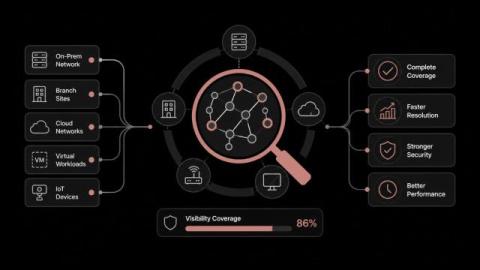
What is Network Visibility and How do you Achieve It?

What happens when the segment that failed was never reporting to anything? The incident stops being a diagnosis and turns into a search, and the cost of that search lands on the business rather than on the network team. Network visibility measures how much of your environment can account for itself under pressure. Most teams assume their coverage is broadly complete because their monitoring platform reports thousands of healthy objects.