Intro to Kubernetes and Rancher - 2020-07-02
Join Adrian Goins as he walks you through everything you need to start using Kubernetes and Rancher today!


The latest News and Information on DevOps, CI/CD, Automation and related technologies.
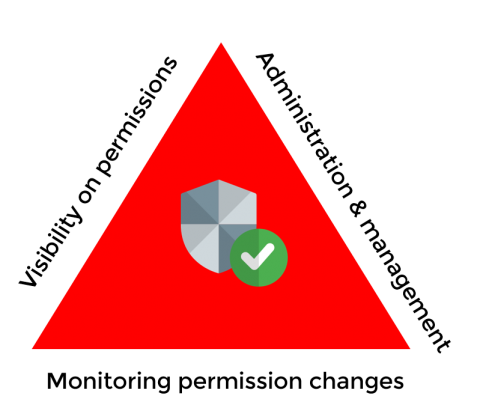
Permissions, access controls, user rights, or privileges define what an identity can see or do in an organization. These terms are often used interchangeably based on context, and essentially perform the same function—granting or denying access to the resources in an enterprise.
Hazelcast is a distributed, in-memory computing platform for processing large data sets with extremely low latency. Its in-memory data grid (IMDG) sits entirely in random access memory, which provides significantly faster access to data than disk-based databases. And with high availability and scalability, Hazelcast IMDG is ideal for use cases like fraud detection, payment processing, and IoT applications.
Learning about the Icinga API can be an eye opening moment for some, and lead to a path of automation and configuration management. But where to start? Well, you can always check out the Icinga API documentation for that. But today, I have an idea for you – I’ll show you how to create a host through the Icinga 2 API.
Do you have a big data center? Do you have terabytes of confidential data stored in that data center? Are you worried that your data might be exposed to malicious attacks? One of the most prominent security features of storage solutions is encryption at rest. This blog will explain this in more detail and how it is implemented in Charmed Ceph, Canonical’s software-defined storage solution.
This blog series is part of the joint collaboration between Canonical and Manceps. Visit our AI consulting and delivery services page to know more. Kubeflow Pipelines are a great way to build portable, scalable machine learning workflows. It is a part of the Kubeflow project that aims to reduce the complexity and time involved with training and deploying machine learning models at scale. For more on Kubeflow, read our Kubernetes for data science: meet Kubeflow post.
Information security (infosec) is a broad field. Its practitioners behave more like artists than engineers. After all, the mandate for security is not “do X”, but instead “ensure no one can do X, Y, Z, ɑ, β, ɣ, etc.”. The array of possibilities leading to infosec failure are vast. It’s like trying to prove a negative, thus making the task near impossible. On one hand we have an impossible task, on the other we have the affordance of time.
As a fast-moving startup, you don’t have the luxury of spending days figuring out exactly what you need in a Kubernetes cluster. We’ve been there. To help out, we wrote a whole ebook on the blueprint we followed as we built and deployed our own web app in Kubernetes.
Every Puppet practitioner can appreciate the wealth of information stored inside PuppetDB. Although Puppet Enterprise console offers some insights into the data, we sometimes need rich dashboards, possibilities to correlate data about facts, nodes and reports and drill-down features. In short, we wish there were a way to unleash the full power of PuppetDB data to create situational awareness about our estate. This article will show that PowerBI is a very powerful companion to PuppetDB.