Operations | Monitoring | ITSM | DevOps | Cloud

The latest News and Information on DevOps, CI/CD, Automation and related technologies.

Observability: is it a future of monitoring

As a concept, observability has been a relatively recent entrant into the world of information technology and cloud technology. The idea originated initially from controls system engineering. Observability refers to the concept of inferring the internal status of the system based on the outputs derived from the same. This is the conventional definition of observability.

Knowing How Much to Spend on the AWS Elastic Load Balancer

Load balancing is an element of most popular web applications. The reason for this is simple: Load balancers maintain application scalability and sustainability. It’s nearly impossible to imagine a modern application handling continuous traffic or periodic traffic spikes while relying only on a single running server’s capacity. As a result, load balancers have become a critical part of software development.

Meeting the "10 Times Challenges" of the 5G Era

Everything about the 5G era is disruptive – from technology to applications, from competition to ecosystems. In addition to entering the mobile services arena, MSOs are in a strong position to gain significant backhaul revenue from this disruptive market place; if they can provide differentiated IP and Optical connectivity for the 5G radio networks.

Verizon and Ribbon's Partnership Advances Industry Standards for STIR/SHAKEN

On October 1, 2020, the FCC invited comments from the telecommunications industry to ascertain progress on implementing Caller ID Authentication. Verizon’s reply underscored the extensive amount of time and effort its team(s) have put in, yielding substantial progress.

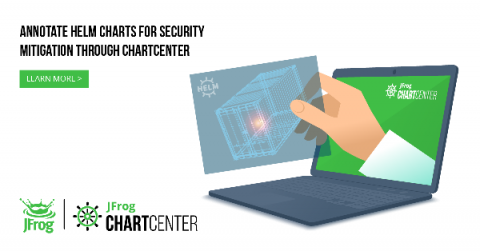
Adding Helm Chart Security Mitigation Notes to ChartCenter

Earlier this year, we launched ChartCenter, our newest community platform to help Kubernetes developers find Helm charts. This new free Helm central repository was built with chart immutability  in mind— meaning every version of a Helm chart and every version in ChartCenter will always be available even if the original source goes down.

How to switch the Docker container runtime to containerd with Charmed Kubernetes

This article describes how easy it is for users of Charmed Kubernetes to switch from the Docker container runtime to containerd. You may have heard that Kubernetes is deprecating Docker as a container runtime after v1.20. Docker as an underlying runtime is being deprecated in favor of runtimes that use the Container Runtime Interface(CRI) created for Kubernetes, such as containerd.

Accelerating Artifacts Distribution Across Repositories and Runtime Environments

When your remote offices around the world can’t get their hands on the most recent builds fast enough for continued testing, when your infrastructure nodes can’t download Bill-of-Materials (BOM) of 1,000s GBs in order to start a release deployment, or when your customers and developer ecosystem can’t download your recent drivers, plugins or OSS in a reliable manner -- productivity and release velocity suffer. Artifacts distribution across remote locations and hyper-scale hybrid environments has become increasingly more challenging in the last couple of years, due to recent trends in modern software delivery.

Kubernetes Namespaces: A Practical Guide

Kubernetes namespaces enable you to organize cluster objects, such as applications, devices and variables. Once you define namespaces, you can use this classification to filter, group and manage objects. You can use the same namespaces in duplicated environments and apply policies to specific clusters segments. Kubernetes namespaces are also important for defining roles and ensuring proper access configuration. If you're monitoring Kubernetes, you should try out MetricFire.