The latest News and Information on Incident Management, On-Call, Incident Response and related technologies.
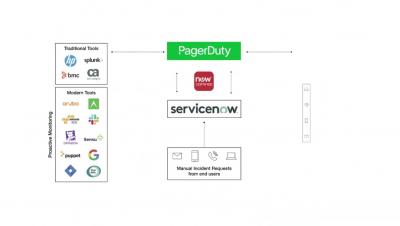
Operations, customer support, engineers and most groups use inconsistent language. This is a serious problem. Imagine NASA doing that with astronauts or a navy with ships talking to each other, but not using the same terms. Something very bad will happen. In our space of incident management, we use words like broke, failed, outage, doesn’t work, dead…all describing the same condition.
Learn how to effectively respond to incidents and ensure business continuity with these incident management best practices.
Site reliability engineers (SREs) are involved in scaling systems and making them reliable and efficient for organizations. But SREs often fail to build system resiliency when they do not have the right tools at their disposal. In this post, we’ll uncover the top 5 tools for SRE that can be used to drive the reliability and stability of software systems. It also examines how SREs can use the tools to improve operations tasks and infrastructure processes.
Incidents can be a bit noisy. Especially when it’s one of higher severity, there are a lot of moving parts that can make it difficult to come away with the information you want at a glance. And if you’re someone who isn’t necessarily tapped into the day-to-day of incident response, such as a head of a department or executive, you’ll want to be able to glean the most actionable information in just a few seconds without having to dig through dense documents.
In this release, we have addressed a number of bugs that were impacting the performance and functionality of the system. In the Kernel, we have resolved an issue where the broadcast was not being stopped after the first user acknowledged it. Additionally, we have fixed a crash that was occurring when loading component infos and an error log that was being generated when the Kernel started in suspended mode.