What is CI/CD?
This article describes how continuous integration, delivery, and deployment can help development teams build and release software quickly and reliably.


The latest News and Information on DevOps, CI/CD, Automation and related technologies.
This article describes how continuous integration, delivery, and deployment can help development teams build and release software quickly and reliably.
I set out to find a credit mechanism or hard-coded limit in packets per second in AWS EC2. After all my findings set out in this series so far, I had one more test to perform around t2.unlimited. I wanted to see how “unlimited” it is and the difference it makes in packet throughput on capable instance types. This post is about my findings.
Welcome savvy builder. If you’ve made it to our corner of the Internet and headed to re:invent, you are in the right place. We want you to leave Las Vegas with the savvy to choose how and when to apply the growing menu of serverless capabilities to your initiatives. To help you, we’re sending our serverless-first engineers to Las Vegas with three goals.
These days, the biggest change to software development is the frequency of deployments. Product teams deploy releases to production earlier (and more often). Months or years-long release cycles are becoming rare—especially among those building pure software products.
I don’t know what to say about this post… I found something weird while investigating PPS on EC2. It seems to correlate with CPU credits on t1/t2/t3 instances, but is consistently inconsistent in presentation. It only shows up when you track the stats yourself, because Cloudwatch doesn’t show the 1-second granularity needed to see these numbers.
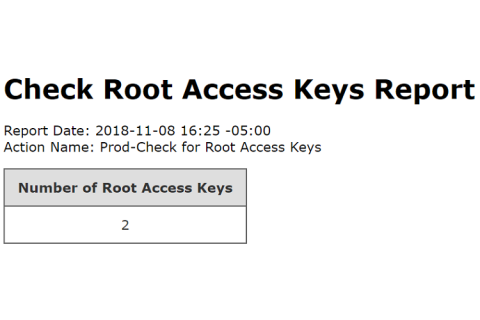
Still referencing Best Practices for Managing AWS Access Keys, best practices recommends that root access keys are never used and should be completely removed from your AWS account. Instead, IAM users with limited permissions should be used. In fact, Skeddly even prevents root access keys from being registered with Skeddly. We always recommend using IAM third-party roles, however, access keys can still be used. And we only allow IAM user access keys to be registered.
While benchmarking packets per second (PPS) in AWS EC2 and searching for hard-coded or other software-based limitations, my early findings suggested that there definitely was a credit mechanism, complete with network throttling, in place. I now know that to be false, since finding the guaranteed throughput / best effort mechanic.
We are very excited to announce a new capability for our Amazon S3 sources. Until recently, the only method Sumo Logic used for discovering new data in an S3 bucket was periodic polling. However, with our new notification-based approach, users can now configure S3 sources such that Sumo Logic is notified immediately (via AWS SNS) whenever a new item is added to an S3 bucket, eliminating the need to wait for new objects to be discovered via periodic polling.