Operations | Monitoring | ITSM | DevOps | Cloud

The latest News and Information on Containers, Kubernetes, Docker and related technologies.

Register to the Qovery v2 beta now!

When we launched Qovery in January 2020, our product was still a prototype, and we onboarded 53 developers to help them deploy their apps in the cloud. At the time, we were only 2 on the team, and our first employee (Patryk Jeziorowski) decided to join us after being one of our first users. 18 months later, 3004 developers from more than 110 countries use Qovery to deploy their apps on their AWS and Digital Ocean account.

Testing in Production: How Did We Get Here?

Testing in production simply means testing new code changes in production, with live traffic, in order to test the system’s reliability, resiliency, and stability. It helps teams solve bugs and other issues faster, as well as effectively analyze the performance of newly released changes. Its overall purpose is to expose problems that can’t be identified in non-production environments for reasons that may include not being able to mimic the concurrency, load, or user behavior.

Automatically create and manage Kubernetes alerts with Datadog

Kubernetes enables teams to deploy and manage their own services, but this can lead to gaps in visibility as different teams create systems with varying configurations and resources. Without an established method for provisioning infrastructure, keeping track of these services becomes more challenging. Implementing infrastructure as code solves this problem by optimizing the process for provisioning and updating production-ready resources.

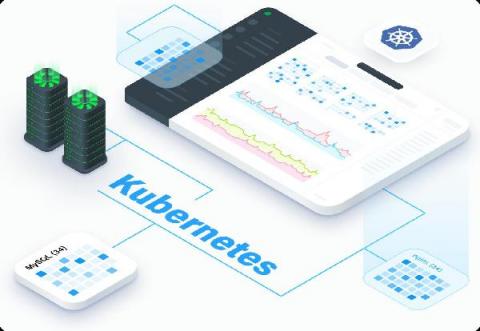
Kubernetes monitoring and troubleshooting made simple

Infrastructure monitoring was difficult enough when entire businesses ran off a few bare metal servers in a dusty, forgotten closet. Other IT infrastructure monitoring tools fell short, unable to provide complete and granular-enough metrics in real time, even when we were only dealing with a handful of systems responsible for running every part of the application stack.

Highly available Kubernetes in IoT: MicroK8s on RaspberryPi

Learn how to set up a Pi-Hole instance with a single command and a cluster of Raspberry Pis on MicroK8s. High availability, load balancing and Kubernetes configuration included. The Raspberry Pi 4 brings the graphics, RAM and connectivity needed for a Linux workstation, so why not use a cluster to set up your own Pi-Hole, the open source network-level ad blocker that acts as a DNS sinkhole or DHCP server.

Civo official launch!

Countdown to our official production launch! We'll be giving you a behind the scenes look at how we build and provision a new CivoStack region - our custom Kubernetes platform based on K3s. Including a specially recorded time-lapse build of our latest location. Featuring an introduction from our CEO Mark Boost, and Director of Innovation Dinesh Majrekar who will run you through our zero-touch region configuration.

Securing AWS Fargate workloads: Meeting File Integrity Monitoring (FIM) requirements

Securing AWS Fargate serverless workloads can be tricky as AWS does not provide much detail about the internal workings. After all… it’s not your business, AWS manages the scaling of underlying resources for you. :) While the security and stability of Fargate’s system is an inherent feature, Fargate follows a shared responsibility model, where you still have to take care of securing those parts specific to your application..

Secure container orchestration at the edge

The cloud-native way of building software allows for consistency across developer environments and massive scalability of application deployments. Both these attributes are useful for edge, but create new challenges related to security and resilience. Watch this demo to see how Canonical’s modular technology stack addresses these challenges by using well-known cloud primitives.