The latest News and Information on Containers, Kubernetes, Docker and related technologies.
In any case, by using the MITRE ATT&CK framework to model and implement your cloud IaaS security, you will have a head start on any compliance standard since it guides your cybersecurity and risk teams to follow the best security practices. As it does for all platforms and environments, MITRE came up with an IaaS Matrix to map the specific Tactics, Techniques, and Procedures (TTPs) that advanced threat actors could possibly use in their attacks on Cloud environments.
The CVE-2021-33909, named Sequoia, is a new privilege escalation vulnerability that affects Linux’s file system. It was disclosed in July, 2021, and it was introduced in 2014 on many Linux distros; among which we have Ubuntu (20.04, 20.10 and 21.04), Debian 11, Fedora 34 Workstation and some Red Hat products, too. This vulnerability is caused by an out-of-bounds write found in the Linux kernel’s seq_file in the Filesystem layer.
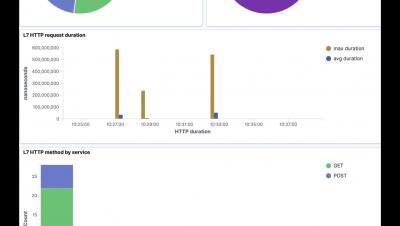
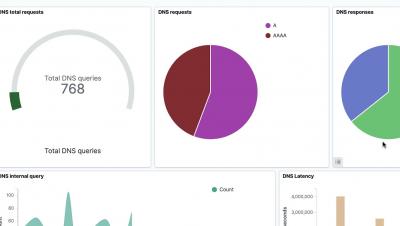
In my previous blog post, I demonstrated how to use Prometheus and Fluentd with the Elastic Stack to monitor Kubernetes. That’s a good option if you’re already using those open source-based monitoring tools in your organization. But, if you’re new to Kubernetes monitoring, or want to take full advantage of Elastic Observability, there is an easier and more comprehensive way. In this blog, we will explore how to monitor Kubernetes the Elastic way: using Filebeat and Metricbeat.
Kubeflow is the open-source machine learning toolkit on top of Kubernetes. Kubeflow translates steps in your data science workflow into Kubernetes jobs, providing the cloud-native interface for your ML libraries, frameworks, pipelines and notebooks. Read more about Kubeflow
The challenges involved in deploying and managing microservices have led to the creation of the service mesh, a tool for adding observability, security, and traffic management capabilities at the application layer. While a service mesh is intended to help developers and SREs with a number of use cases related to service-to-service communication within Kubernetes clusters, a service mesh also adds operational complexity and introduces an additional control plane for security teams to manage.
Welcome to another monthly update on what’s new from Sysdig! Happy 4th of July to our American audience, and bonne Bastille to our French friends. It’s been heating up in the northern hemisphere, so we hope you’ve all been managing to stay cool and safe. Our team continues to work hard to bring great new features to all of our customers, automatically and for free! The big news this month is our intent to acquire Apolicy, which has everyone full of excitement.
Building successful machine learning (ML) production systems requires a specialized re-interpretation of the traditional DevOps culture and methodologies. MLOps, short for machine learning operations, is a relatively new engineering discipline and a set of practices meant to improve the collaboration and communication between the various roles and teams that together manage the end-to-end lifecycle of machine learning projects.