What is BigPanda?
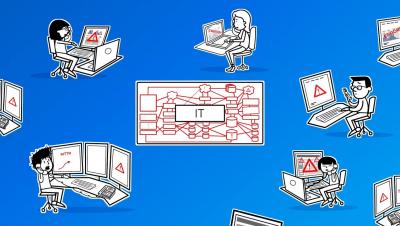
BigPanda helps IT Ops, NOC and DevOps teams detect, investigate, and resolve IT incidents & outages in fast-moving IT.


In particular, I liked very much the article that our colleague Sara Martin wrote in Pandora FMS blog about crisis management in information technology, these are the steps: Legend: “Jack’s Lantern (https://commons.wikimedia.org/wiki/File:Jack-o-lantern.svg) This article starts from point number five: when after a certain time of recovery the crisis has been solved and becomes a post mortem incident. This word comes from the Latin language and it means “after death”.
Critical incidents don’t come with a predetermined schedule or warning. So, it’s up to your organization to have an incident response procedure in place to combat these crises. Don’t have one? Read below to perfect your incident response operations and adopt the right tools and procedures to fight against any critical event.
The October update of the mobile app includes the improvements described below and the user experience includes a new feature. The user interface of the app has been improved so that you can now decide for yourself if you want to see all Signls on the dashboard differentiated by categories. Using the “More” button on the dashboard’s Signl widget, you can now open a context menu and show or hide the display of the categories.
After the unfortunate Commonwealth Bank of Australia outage last week, the powerful Payment Systems Board—whose members include the chairs of the RBA and APRA – announced it would make all outage data public to prevent banks, payment schemes, and telecommunications carriers from “hiding behind” the performance statistics shared by each institution.
Monitoring is an art form. That sounds cheesy and lazy, but the right kind of monitoring is very context-dependent and rarely does the same practice work across multiple pieces of software or people. This gets even harder when you think about modern software architectures. Microservices? Container schedulers? Autoscaling groups? Serverless? ${New-technology-that-will-solve-all-of-my-problems-but-probably-creates-other-problems}?
The dreaded monthly operations and application meeting is edging near. You know which meeting we’re talking about: the one where all the Ops teams get together to talk about what they are seeing, about application enhancements and modifications, potential improvements, and often – about their frustrations!