In the Heat of the Page: Coping with the Root Cause of Incident Stress
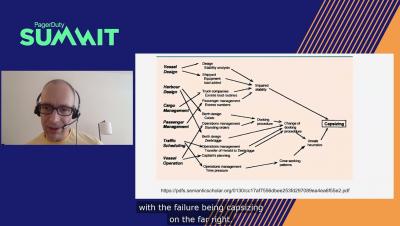
J. Paul Reed, Senior Applied Resilience Engineer at Neflix walks us through how to cope with incident response stress.


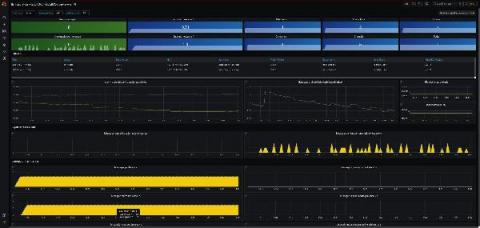
We are happy to announce that the RabbitMQ integration is available for Grafana Cloud, our composable observability platform bringing together metrics, logs, and traces with Grafana. RabbitMQ is one of the most popular open source message brokers, used worldwide at both small startups and large enterprises. It is easy to deploy on premises and in the cloud, and supports multiple messaging protocols.
If you’re wasting precious time and resources responding to customer emails and phone calls whenever an incident arises - now sounds like a good time to set up your very own status page! A Statuspal status page is a professional and effective way to communicate incidents and maintenance updates internally for your team or publicly to your customers. You would be right in thinking that there are many options available and one of the largest operators in the market is Status.io.
Amnon is a Software Engineer at ScyllaDB. Amnon has 15 years of experience in software development of large-scale systems. Previously he worked at Convergin, which was acquired by Oracle. Amnon holds a BA and MSc in Computer Science from the Technion-Machon Technologi Le' Israel and an MBA from Tel Aviv University. Many products that report internal metrics live in the gap between reporting too little and reporting too much.
Facility managers, including service technicians, are expected to operate their facilities safely to meet the expectations of customers. They focus on the smooth functioning and maintenance of many components that fall within the scope of their facility. Typical components include roads, pavements, HVAC and plumbing systems. As a facility manager, staying on top of these siloed and geographically dispersed systems can be challenging.