Operations | Monitoring | ITSM | DevOps | Cloud

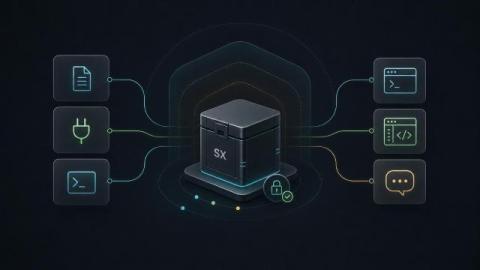
There's an npm-shaped hole in the AI tooling stack

I've had this same conversation with 60+ engineering teams in the last six months. A team adopts AI tooling. One developer figures out how to use it well, builds up a vault of skills, MCP configs, and slash commands that 10x their output. The rest of the team has whatever they can scavenge from a shared Notion doc.

Why agentic AI development needs reliability guardrails

AI has massively accelerated code deployment. In fact, since the introduction of agentic coding, GitHub has seen exponential growth in PRs, commits, and new repos. What they originally predicted would require 10X capacity, they’re now estimating it’s going to require 30X capacity, and the biggest driver is agentic development. Companies across industries are building agentic pipelines to ship features faster than ever before. That acceleration isn’t without risk.

Anthropic Shipped An Enterprise Analytics API. We Shipped the Claude Adapter Today.

Anthropic just shipped an Enterprise Analytics API with user-level token and cost data. Today, we're shipping the CloudZero adapter that maps that data to teams, budgets, and cost centers — so Claude spend gets the same accountability as the rest of your stack. Anthropic released the first beta of its Enterprise Analytics API this week. Admins can pull token usage and dollar cost through a programmatic endpoint, broken down by user, model, context window, region, and product surface.

Why Network Operations Needs Data-Centric AI

The discussion around AI in infrastructure and operations has become increasingly model-centric. Teams want to know what model a platform uses, how current it is, how much reasoning capacity it has, and how quickly it can be updated as the model landscape shifts. Those are reasonable questions, but they tend to arrive too early. In production operations, the more consequential question is what happens to the data before any model is asked to interpret it.

You Are Building With AI. Who Is Watching What It Ships?

AI coding assistants have made it possible for a single developer to build and ship a production application in a weekend. Claude Code, Cursor, GitHub Copilot, and similar tools can scaffold a Rails app, write the models, generate the views, wire up the API, and push to production before Monday. This is genuinely exciting. It is also genuinely dangerous if you do not have monitoring in place before you ship.

LLM Observability: Lessons From MLOps w/ Maria Vechtomova (Cauchy)

For nine years, Maria Vechtomova was shouting about monitoring. Nobody cared, until LLMs arrived. As co-founder of Cauchy, Databricks MVP, and one of the most followed voices in MLOps, Maria has watched the field evolve from hand-built experiment trackers to today's flood of observability tools, and her central claim might surprise you: globally, nothing has changed. The fundamentals are the same: track your code, data, and models so you can roll back when something breaks.

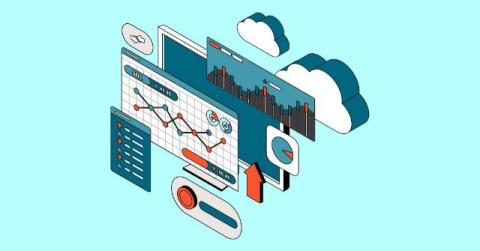
New ways to agentically build and edit dashboards

The traditional dashboard workflow, teams slowly handcrafting visualizations to track critical KPIs, is dying in a world of AI agents. A few years ago, in a pre-agentic-everything world, we tried to make it easier for developers to monitor critical experiences. We introduced Insights pages, which were pre-configured dashboards any Sentry user could adopt instantly that surfaced common health signals, like Web and Mobile Vitals.

The AI Agent Accountability Crisis: Why Governance Isn't Keeping Up With Deployment

Every enterprise is building AI agents. Marketing has one summarizing campaign performance. Engineering has one triaging incidents. Customer support has one resolving tickets. Finance has one processing invoices. Each was built by a different team, using a different framework, with different assumptions about security. Now those agents are talking to each other through agent-to-agent (A2A) communication. The incident-triage agent calls the customer-support agent to check affected accounts.

AI Asked Our General Counsel Anything. She Didn't Hold Back.

What happens when AI interviews a tech leader? You get unexpectedly honest answers. Harness General Counsel Hanna Steinbach sat down with ChatGPT — and skipped the corporate script. From the realities of parenting while leading a legal team at a high-growth startup, to the daily habits that keep her grounded, this is the kind of candid leadership perspective you rarely see. Oh, and she's definitely the person sprinting to the gate right as boarding starts.