Mailchimp
Not subscribed to OpsMatters Newsletter


What is DNS? DNS is the Domain Name System, or the hierarchical system of nomenclature that orders the names of members who connect to IP networks, such as the Internet. In this article we will briefly learn what DNS is, how it works, what it is used for and some of its advantages and disadvantages. What is DNS? Shall we begin?
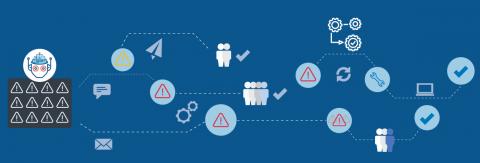
Proactive Incident Analysis, Diagnosis, and Resolution with Service-Centric AIOps. Alerts define the state of an infrastructure resource, application, or any other IP discoverable device. Organizations take action on alerts based on business impact and priority and ensure that IT service performance meets the required standards for availability, usability, and security.
PHP is one of the most popular server-side scripting languages for building web applications because it’s easy to use. No matter what you build, making it easy to log errors is key to ensuring a short code-test-learn feedback cycle.
Amazon Elastic Container Service (ECS) is an orchestration service for Docker containers running within the Amazon Web Services (AWS) cloud. You can declare the components of a container-based infrastructure, and ECS will deploy, maintain, and remove those components automatically. The resulting ECS cluster lends itself to a microservice architecture where containers are scaled and scheduled based on need.
In Part 1, we introduced a number of key metrics that you can use for ECS monitoring. Monitoring ECS involves paying attention to two levels of abstraction: the status of your services, tasks, and containers, as well as the resource use from the underlying compute and storage infrastructure, monitored per EC2 host or Docker container. In this post, we’ll survey some techniques you can use to monitor both levels of your ECS deployment.
As we explained in Part 1, it’s important to monitor task status and resource use at the level of ECS constructs like clusters and services, while also paying attention to what’s taking place within each host or container. In this post, we’ll show you how Datadog can help you: Automatically collect metrics from every layer of your ECS deployment, Track data from your ECS cluster, plus its hosts and running services in dashboards, and more.