Mailchimp
Not subscribed to OpsMatters Newsletter


In this live stream discussion, angel investor Ross Haleliuk joins Cribl’s Ed Bailey to make a big announcement about his new fund to shape the future of the cybersecurity industry. Ross is a big believer in focusing on the security practitioner to provide practical solutions to common issues by making early investments in companies that will promote these values.
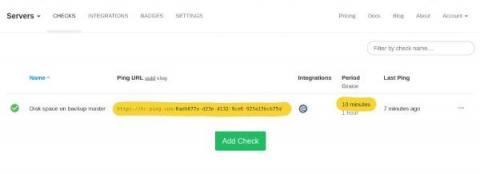
Let’s say you want to get an email notification when the free disk space on your server drops below some threshold level. There are many ways to go about this, but here is one that does not require you to install anything new on the system and is easy to audit (it’s a 4-line shell script).
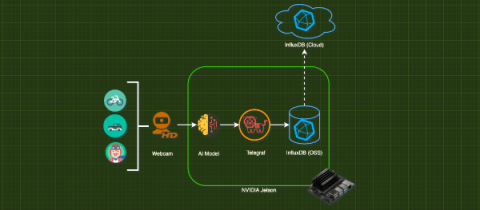
A look at the main things you need to consider when planning your IoT project with links to tutorials and source code. There’s a lot of stuff written about the Internet of Things (IoT) at a conceptual level that doesn’t really cover anything concrete. If you’ve ever wanted to get started on a real IoT project but didn’t know where to start, you are in the right place.
Digital code behind a digitized face Welcome back to our series with Nicholas Wegman, Ph.D., Senior Director of Artificial Intelligence and Alex Barnes, Senior Director of Product Management, as they continue to discuss the science behind Artificial Intelligence (AI) and reveal how it can specifically increase retail/CPG margin. In the second part of our three-part series, we’ll delve deeper into the data science of AI, and why it’s not working for every business.
ServiceNow has embraced a three-zero strategy for its digital technology operations: zero unplanned outages, zero physical footprints, and zero user-reported incidents. We adopted a cloud-first policy as part of our zero-physical-footprint strategy. This approach delivers the operational agility we need as a growing company—we can add capacity on demand. With a data-center approach, that would take weeks or months.
High levels of web traffic can lead to network congestion, often causing network latency, and in some cases, outages. Traffic shaping is a technique that can help prevent network congestion by controlling how much traffic enters and leaves a network. We debuted traffic shaping in the release of HAProxy 2.7 and HAProxy Enterprise 2.7, allowing our users to control client upload and download speeds.