Operations | Monitoring | ITSM | DevOps | Cloud

Latest posts

What are Azure Functions?

Serverless computing, also known as Functions as a Service (FaaS), has taken the world of cloud computing by storm. A game-changer in its own right, serverless computing has completely transformed the way developers approach and design their applications by abstracting the underlying infrastructure layer. But what makes it a powerful paradigm shift?

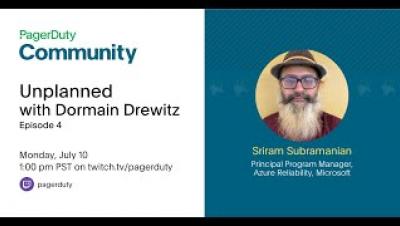
The Unplanned Show, Episode 4: Sriram Subramanian on Responsible Generative AI

Generative AI is a rapidly-evolving ecosystem with a lot of attention. In this episode, Dormain Drewitz asks Sriram Subramanian about the main challenges to responsibly implement generative AI, including content that’s harmful, inaccurate or violates privacy or security standards. Sriram discusses Microsoft’s 6 tenets to responsible generative AI, as well as the notion of shared responsibility between platform providers and foundational LLMs and the developers and data engineers building on top. Sriram also answers questions about where to get started safely with generative AI and shares his framework for identifying opportunities to add value.

What Is a Full Server Backup?

Today, data is one of the most valuable business assets. To ensure that the information stored in servers remains safe and accessible at all times, IT professionals rely on data backup. There are many types of data backup options for servers that save time and space, such as differential backup and incremental backup, but these do not capture the data in its entirety. Whenever IT teams need to capture all the data stored on a server, they conduct a full server backup.

Optimizing Dynamics 365 Performance: Strategies for Speed and Efficiency

Dynamics 365 CRM has become a vital tool for organizations to effectively manage customer relationships, streamline processes, and drive growth. However, to fully leverage the power of Dynamics 365 CRM, it is crucial to ensure optimal performance. Slow-loading pages, sluggish response times, and system bottlenecks can hamper productivity, frustrate users, and impact customer satisfaction.

Improve Visibility and Capture More Data with Triage Incidents

As new incidents emerge, there are often many unknowns about the size, severity, and cause of the problem. Sometimes it’s not clear if the problem is an incident at all. That’s where introducing a triage stage to your incident management process can help. In this post, we’ll look at the benefits of adding a triage layer to your incident management, and how Rootly’s Triage feature allows you to seamlessly transition from triage to real incident (or false alarm).

Distributed Tracing with MuleSoft APIs using OpenTelemetry

Distributed tracing enhances observability by providing detailed insights into the performance, behavior, and dependencies of your distributed system. It empowers you to proactively identify and resolve issues, optimize performance, and deliver a reliable and high-performing application.

Sentry vs Datadog - Detailed Comparison

Datadog and Sentry are two popular tools used for application performance monitoring and observability. Sentry is a dedicated error tracking and performance monitoring service, while Datadog is a comprehensive monitoring platform that unifies logs, metrics and traces. While there are similarities in their capabilities, there are also important differences that organizations should consider when deciding which tool to use.

Densify: We Let Our Developers Choose Their Own K8S Requests and Limits and This Happened!

Some Things are Better Left to Machines Kubernetes containers require specific resource specifications to run properly, and getting this right requires an understanding of their utilization patterns in the wild, replication activity, and the policies governing how busy you want your nodes to be. Yet most organizations leave the key resourcing decisions to the developers, without arming them with the tools and analytics to connect the dots.

Server performance metrics: 11 to consider for actionable monitoring

With the DevOps movement becoming mainstream, more and more developers are getting involved with the end-to-end delivery of web applications, including deployment, monitoring performance, and maintenance. As an application gains more users in a production environment, it’s increasingly critical that you understand the role of the server.