Operations | Monitoring | ITSM | DevOps | Cloud

Latest posts

10+ Best Tools & Systems for Monitoring Red Hat Server Performance [2023 Comparison]

Red Hat is a Linux distribution known for its stability, security, and enterprise-grade features. Whether you’re running Red Hat on bare metal servers or virtual machines, monitoring the performance of your infrastructure is essential. In this article, we’ll explore the top performance monitoring tools for Red Hat servers. We’ll compare their pros, cons, and pricing to help you make an informed decision.

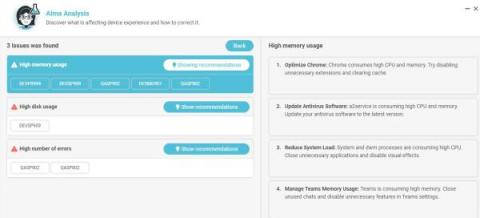
Latest Collective IQ Release brings Alma Analysis

Almaden Inc’s flagship product, Collective IQ® for Digital Experience Management, recently underwent a transformative update. Providing extensive data collection and analysis, aided by the incorporation of generative AI, Collective IQ® introduces a new level of simplicity to the task of ensuring company employee productivity and job satisfaction. Greatly enhanced detailed data drill-downs take the guesswork out of decision-making and speed troubleshooting.

What is Chronograf?

InfluxDB is an open-source time-series database, i.e. a database optimized for storing data points collected across an interval of time. Developed by InfluxData, InfluxDB is intended for fast, high-availability storage and retrieval of many different system metrics. The entire InfluxDB project, which is housed at influxdata.com, includes: Yet with all of these tools for collecting and processing time-series data, there's still one step missing—visualizing it. That's where Chronograf comes in.


Should you DIY your Opentelemetry Monitoring?

I recently read this thread in the CNCF slack from someone wanting to send metrics and traces directly to Postgres. Reasonable enough right? After all once your data is in postgres you can query it to your heart’s content. And isn’t the general culture of OpenTelemetry that you should be able to do all of Observability without resorting to SaaS tools? The thread, however, is pretty universally opposed to this approach; and I have to say that I agree.

How to choose an OS for software development in automotive

Automotive as an industry is constantly looking for ways to improve its processes and efficiency. The one common tool that is at the intersection of all software development activities is the operating system (OS). From advanced simulation tools to new vehicle designs, the OS has to be reliable and provide the best platforms for a maximum number of purposes.

Large language models (LLMs): what, why, how?

Large language models (LLMs) are machine-learning models specialised in understanding natural language. They became famous once ChatGPT was widely adopted around the world, but they have applications beyond chatbots. LLMs are suitable to generate translations or content summaries. This blog will explain large language models (LLMs), including their benefits, challenges, famous projects and what the future holds.

Canonical Kubernetes 1.28 pre-announcement

Kubernetes 1.28 is currently planned to be released on the 15th of August 2023. Canonical Kubernetes 1.28 is scheduled to release swiftly afterwards, with MicroK8s 1.28 expected to be generally available within 24 hours of upstream, and Charmed Kubernetes expected to follow within days. We consistently follow the upstream release cadence to provide our users and customers with the latest improvements and fixes, together with security maintenance and enterprise support for Kubernetes on Ubuntu.

Micro-Outages Uncovered: Exploring the Real Cost of Downtime for Your Business

Unplanned downtime is an eventuality every business tries to avoid but will face. In today’s digitally interconnected world, outages can be particularly damaging, especially if the business is unprepared. Not only can outages cause employee frustration and anger customers, leading to numerous intangible costs like lower satisfaction hurting a company’s reputation, but the loss of employee productivity caused by unplanned downtime can significantly affect the bottom line.