Introducing VDI Experience. Nexthink's latest innovation that can accurately pinpoint whether an issue originates from VDI or elsewhere in the environment—and most importantly, resolve it seamlessly.
In our everyday lives, people monitor various aspects like heart rate, step count, and stock performance to detect any unusual changes. The same concept applies to API monitoring. By continuously tracking and collecting measurements, teams can establish benchmarks and quickly identify deviations from the norm. This proactive approach helps detect and resolve issues, ensuring services perform at their expected level.
It is the start of season 2, and we are kicking it off with Scott Stauffer talking about coffee, video games, the glorious innovation of technology over our years, guide dogs, AI, and so much more. Without giving away too much, in the show there is a discussion about guide dogs.
Risk is bad... or is it? Dave MacKinnon makes a case for embracing the risk—and how managing it effectively can be a sign of a healthy, thriving organization.
A service catalog is the central hub for IT services—an essential tool for every modern organization. It boosts efficiency, improves collaboration, and ensures faster service delivery. In this short video, see how Alloy Navigator's ready-to-use, role-specific service catalog makes IT services easier to request and deliver—saving time for end-users, IT specialists, and managers alike.
Join me at KubeCon 2024 as I sit down with Josh Lee, Developer Advocate at Altinity, to discuss the latest trends, challenges, and insights in observability. In this interview, we cover key topics such as OpenTelemetry adoption (including the Open Agent Management Protocol), data sovereignty, standardization through semantic conventions, and the need to unify observability tooling across organizations.
As more businesses embrace digital transformation, cloud computing is becoming more relevant each day. Cloud technology provides the flexibility, scalability, and agility modern organizations need to stay competitive, transforming everything from daily operations to customer experiences. However, as companies expand their use of the cloud, managing these complex environments is proving to be a real challenge. What is cloud monitoring?
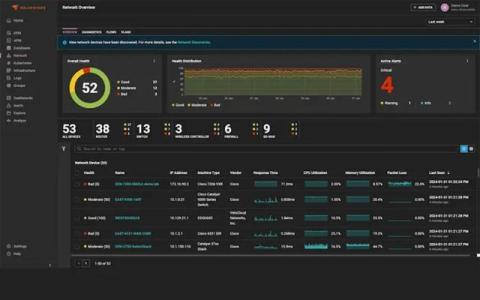
IT Operations teams must detect and address incidents quickly to ensure efficient operations and reliable IT infrastructures. As organizations grow and scale their service offerings, their IT environments inevitably become more complex. Filtering through alerts becomes increasingly challenging due to excessive noise and a lack of end-to-end visibility. As a result, IT operations teams are forced to escalate issues more frequently.
Customers evaluate a modern observability and monitoring solution by the ROI they get, self-monitoring capabilities ultimately improve scalability and quality. The value of any observability solution lies in its ability to proactively detect and alert customers to issues before they cause a business-impacting outage. IT infrastructures and applications can fail in many different ways.
At Coroot, we started using eBPF to give users insights into their system performance without needing them to change code or redeploy services. This approach not only makes setup easier but also ensures full visibility, even for third-party and legacy services. To truly achieve this, though, the tool needs to support a wide range of application protocols. Coroot has long supported popular ones like HTTP, gRPC, Postgres, MySQL, Redis, Memcached, MongoDB, Kafka, and Cassandra.