Operations | Monitoring | ITSM | DevOps | Cloud

How to Set Up Co-Managed IT Access Like a Ninja

Handing the keys to multiple IT teams doesn’t have to invite RBAC chaos. In this quick-strike session we’ll show you how to carve out precise roles in NinjaOne, keep permission creep on a tight leash, and spin up a co-managed setup that’s accessible but secure — without adding a new manual headache to your week. Bring your access questions; leave with a ninja-sharp checklist.
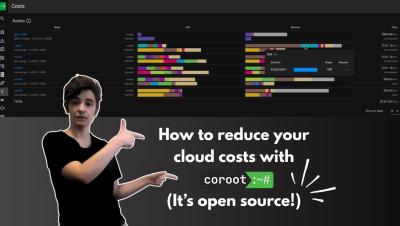
How to reduce Cloud Costs (with Open Source!)

We strongly believe that simple observability should be an innovation everyone can afford to benefit from: which is why Coroot is open source, and includes cost monitoring for Azure, GCP, AWS, or your own custom settings. eBPF automatically tracks how each deployment impacts your cloud costs, so you can easily roll back changes and avoid lovecraftian monthly bill when necessary.

How to Set Up a Syslog Server: A Complete Step-By-Step Guide

Syslog servers are essential for centralized log management, helping network engineers monitor, troubleshoot, and secure network devices efficiently. This guide walks you through setting up a syslog server from scratch, focusing on practical steps using rsyslog on a Linux system—a common and robust choice for syslog collection. Windows does not have a native syslog server, so you need third-party software.

How to be prepared for cloud provider outages

GCP’s recent outage on June 12th was a reminder of just how interconnected modern architectures are. The 2 hour and 28 minute outage affected dozens of companies and spanned 80+ Google services and products. But what was really illuminating was just how far the outage spread due to hidden dependency risks. Many companies that don’t run on GCP were startled to find their services suddenly affected because they had dependencies or depended on vendors that did use GCP.

How to test your systems for scalability and redundancy with fault injection

Part of the Gremlin Office Hours series: A monthly deep dive with Gremlin experts. Do you know if your services can tolerate losing a node? What about an entire availability zone? Or a region? Large-scale outages aren’t unheard of. When you’re running critical services, it’s vital that those services can keep running even if an AZ or region fails. In addition to failing over, these services also need to scale quickly so traffic shifts don’t overwhelm your systems. How do you prove that a service is both scalable and redundant? The answer is with Fault Injection.

New: Status modal integration is here!

At StatusGator, our mission is to make status transparency effortless—for you and your users. Today, we’re introducing a new way to keep your users informed in real time: the Status Modal Embed. Now you can display a compact, customizable modal on your website that shows the current status of your services—incidents, maintenance, or full operational status—all with a direct link to your full status page.

2025 Cloud Pricing Comparison: An In-Depth Guide

Over $44.5 billion in cloud spend goes to waste annually, per the FinOps Foundation. No wonder reducing unnecessary costs is critical to protecting your margins. A logical place to start? Cloud service pricing. Providers like AWS, Azure, and Google Cloud continue to evolve their pricing models. They are offering new discounts, regional rates, and shifting commitments. All to win your business. Yet, a cloud pricing comparison alone doesn’t give you a complete picture.

Smart Ring Development (Part 1) Research and Prototype

This series of articles discusses the development of a SOTA Open Smart Ring - a tiny wearable packed with electronics that fits on your (even the smallest) finger. We dive deep into what it means to develop such a product, its challenges, and ultimately, how to make it a manufacturable and usable piece.