Here’s a quick checklist to publish articles or guest posts on Fyipe Blog. We invite anyone to publish stories to any of our publications. If you wish to contribute. Please send an email to [email protected] with your draft article. Please make sure your draft article follows guidelines in this post. Here’s what all this means for you as a writer: Educate your readers and teach them something new. Cut all the fluff. Get to the point — fast. Do not waste their time.
Hey there, While the World Economic Forum (WEF) in Davos always dominates the news agenda across a variety of topics I wondered what discussions around technology occurred this year, particularly from a cybersecurity perspective. During my reading, I came across the global risks report 2020 published by WEF and thought sharing some of the key points would help you in case you have to argue about the importance of cybersecurity.
NiCE IT Management Solutions is proud to serve global key-players in advanced performance and health monitoring. Read the latest customer reference on how the NiCE Active 365 Management Pack is helping a Canadian Credit Union in their Microsoft Office 365 operations.
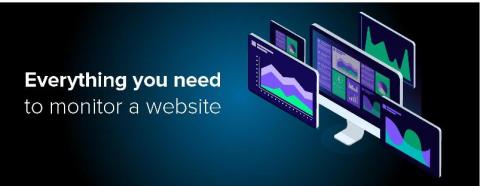
Website downtime can cause serious damage not only for your reputation and brand image, but also in productivity, all of which leads to business losses. A Gartner survey revealed that website downtime can cost companies up to $5,600 per minute. Recently, the world's biggest online retailer, Amazon, experienced a technical blotch leading to their website being inaccessible for 13 minutes, costing the company around $2 million in revenue losses.
In this post, we’ll look into tried and true methods of improving Rails view performance. Specifically, I will focus on database efficiency, view manipulation, and caching. I think the phrase “premature optimization is the root of all evil” has been taken a little out of context. I’ve often heard developers use this during code reviews when simple optimization techniques are pointed out.
Welcome to 2020! (We’re a little slow with that on the Loki team.) To kick off the year we are releasing Loki 1.3! Anyone running Loki in microservices mode will be excited by this release as it introduces the Loki Query Frontend. (If you aren’t using microservices, be patient – good things will be coming your way soon.) The query frontend sits in front of the queriers and allows sharding queries based on time.