Operations | Monitoring | ITSM | DevOps | Cloud

Terminal dependencies for CircleCI workflows: Always run what matters

When a job fails, gets canceled, or never runs, the work that still needs to happen afterward (cleanup, notifications, teardown) has no clean way to trigger. There is no easy way to express “run this no matter what” in your pipeline config without duplicating jobs or adding fragile workaround branches. Terminal jobs change that.

From Jammy to Resolute: how Ubuntu's toolchains have evolved

The evolution of Ubuntu’s toolchains story goes beyond just providing up-to-date GCC, LLVM, and Python. It is also about opinionated openJDK variants, task-focused devpacks, FIPS compliant toolchains, and snaps, like the new.NET snap and Snapcraft plugin. These are enhancements that collapse half a day of setup into a single command or two, demonstrating what a frictionless developer experience means in practice for framework and application developers on Ubuntu.

The New Economics of Enterprise AI: Why Small Models Win Where It Matters

For years, progress in AI was equated with scale. Larger models, broader parameter counts, and increasingly complex cloud architectures were treated as signals of advancement. In enterprise operations, however, scale alone does not determine success. Economics does. As AI becomes embedded in operational workflows, organizations are discovering that model size is less important than cost stability under continuous load. AI-driven operations do not run in bursts. They run constantly.

Join operator and Query Agent for smarter log analysis

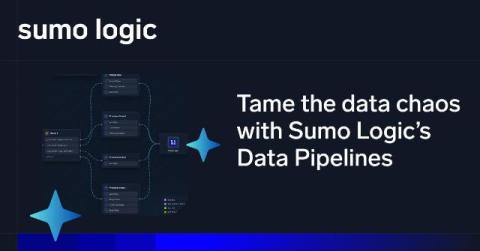
Sumo Logic’s log analytics capabilities have always provided the greatest insights to help you secure, monitor and troubleshoot your environment. Now, with our Query Agent, as part of Dojo AI, creating optimized log searches with natural language is even easier. Query Agent works with a wide variety of operators, including the join operator, for parsing, aggregation, data transformation, filtering, advanced analysis and lookup.

Episode 10 - How I Learned to Stop Worrying and Love AI

Are we still in the first chapter of AI, and mistaking it for the whole story? In this episode of The Intelligent Enterprise, host Tom Stoneman zooms out from the headlines to explore where we really are in the AI journey. He’s joined by journalist and independent analyst Joe McKendrick, who has spent decades documenting how emerging technologies reshape business and society. As co-chair of the AI Summit in New York and a senior contributor to Forbes and ZDNet, Joe brings the perspective of someone who understands how these stories unfold over time.

How to Use Time Series Autoregression (With Examples)

Time series autoregression is a powerful statistical technique that uses past values of a variable to predict its future values. This approach is particularly valuable for forecasting applications where historical patterns can inform future trends. In this hands-on tutorial, you’ll learn how to implement autoregressive (AR) models using Python and see how InfluxDB can enhance your time series analysis workflow.

Anything but that cloud

"Anything but that cloud." I asked why. "Our biggest customer is a giant retailer," he said. "That hyperscaler's parent company is the retailer's biggest competitor. So our customer refuses to do business with anyone who uses that cloud. We use that cloud, we lose our biggest customer. Full stop." That was the entire conversation about cloud choice. It wasn't a technical preference. It wasn't a pricing optimization. It wasn't a sovereignty concern.

Geopatriation in India: Why data residency is a boardroom illusion

In 2026, a new term has infiltrated Indian boardroom discussions: Geopatriation. Coined by Gartner as a top strategic technology trend for 2026, geopatriation is the deliberate relocation of workloads and applications from global cloud hyperscalers to regional or sovereign alternatives in response to geopolitical risk. While the previous decade was defined by a cloud-first approach, the current landscape is defined by the need for sovereignty.

Beyond the Big Bang: De-risking Cloud Migrations with Progressive Delivery | Harness Blog

At 2 am, your migration goes live. By 2:07, error rates spike, and rollback isn’t an option. Cloud migrations, API rewrites, and architecture transformations rarely fail because of bad code. They fail because of how that code is released. Most teams still rely on a “big bang” cutover where infrastructure, services, and user-facing changes go live at once. This concentrates risk into a single moment.