Meet Scout's new transaction timeline view
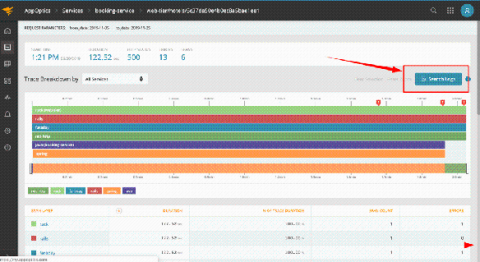
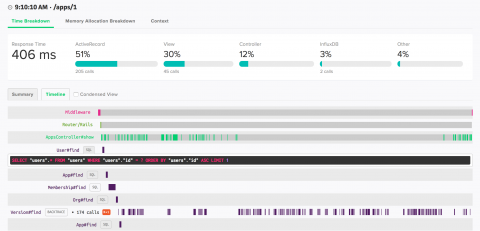
Today we're happy to announce that our transaction timeline view has exited BETA and is now generally available for Ruby.


Today we're happy to announce that our transaction timeline view has exited BETA and is now generally available for Ruby.
One of the biggest challenges with text-based communication is that oftentimes context, emotions, and intentions can get lost in translation. On the other hand, when we speak to one another, we have the advantage of inflection, tone, and body language to help convey our points effectively. Historically, adding context to text-based communications involved writing HTML code—something that was a bit too complicated for the average internet user.
One of these problems is that Kubernetes has no login process. Ordinarily, the client software would initiate this login flow, but kubectl does not have this built in. Kubernetes leaves it up to you to design the login experience. In this post, I will explain the journey we took to get engineers logged in from the terminal and the challenges we faced along the way. The first step to SSO was to set up Dex as our Identity Provider.
Making the move to DevOps can be a daunting undertaking, with many organizations not knowing where to start. I recently had some fun taking a few DevOps assessments to see what solutions are currently in the market. I varied my answers from an organization that fully embraced DevOps to an organization at the beginning of its journey.
This year was my third in a row attending (and now speaking at!) Monitorama. Because the organizers do a great job of turning introverts into extroverts for three days straight, it’s always a fun and exhausting time—but one of my favorite parts is how much folks continue talking about and sharing the content, days or weeks after it’s over. So, to continue the drumbeat, here were some of my highlights from this year.
OpsRamp delivers real-time observability that IT teams need to understand the performance and availability of business services. Given that modern digital services rely on dynamic and distributed infrastructure, it is critical to pinpoint performance issues that prevent an enterprise from delivering compelling user experiences. So how do you track the end-customer experience as well?
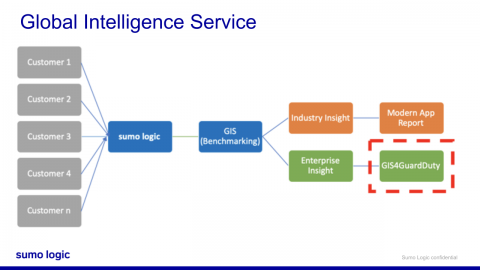
Today, we are announcing the general availability of our new module within our Global Intelligence Service with a benchmarking capability on AWS security by baselining the Amazon GuardDuty findings. If you are one of the 100,000 users of Sumo, go to your App catalog and install the Amazon GuardDuty benchmark app with one click and see your threats against the global threats that we gather from hundreds of Sumo customers.
In this post, I will describe in detail how to use the Threat Intelligence plugin that ships with Graylog. I’ll start with the steps necessary to prepare your data, then explain how to activate the feature and how to configure it for use.