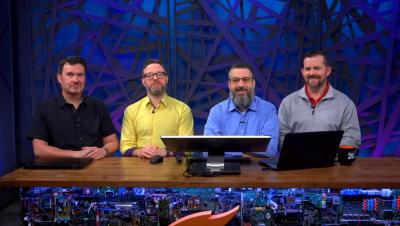
Keynote address by Rajalakshmi Srinivasan, Product Manager, Site24x7 at CIO 500
The keynote touches upon the 5 Important points which are important for "Adoption, Agility & Awareness to Survive & Thrive" in this competitive world.


In this post, we’ll look into tried and true methods of improving Rails view performance. Specifically, I will focus on database efficiency, view manipulation, and caching. I think the phrase “premature optimization is the root of all evil” has been taken a little out of context. I’ve often heard developers use this during code reviews when simple optimization techniques are pointed out.
Welcome to 2020! (We’re a little slow with that on the Loki team.) To kick off the year we are releasing Loki 1.3! Anyone running Loki in microservices mode will be excited by this release as it introduces the Loki Query Frontend. (If you aren’t using microservices, be patient – good things will be coming your way soon.) The query frontend sits in front of the queriers and allows sharding queries based on time.
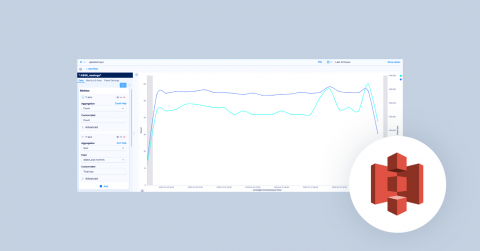
AWS S3 Server Access logs provide detailed records for requests made to S3 buckets. They’re useful for many applications. For example, access log information can be useful in security and access audits. It can also help generate customer insights and better understand your Amazon S3 bill. Coralogix makes it easy to integrate with your S3 server access logs via a Lambda function.
Service Level Objectives or SLOs are one of the fundamental principles of site reliability engineering. We use them to precisely quantify the reliability target we want to achieve in our service. We also use their inverse, error budgets, to make informed decisions about how much risk we can take on at any given time. This lets us determine, for example, whether we can go ahead with a push to production or infrastructure upgrade.
Customers can generate hosted status pages that display the status such as availability, response time and incidents of their services (websites, API, infrastructure) to their own clients or for internal use. All status pages are hosted and maintained by our care. Users point a custom domain to our DNS, and after seconds their page is ready. Hassle free.