RapidSpike Magecart Detection
RapidSpike Magecart Detection helps you to detect client-side security breaches such as; website skimming, form-jacking, and supply chain attacks.


Five worthy reads is a regular column on five noteworthy items we’ve discovered while researching trending and timeless topics. This week, we explore the concept of alternative data.
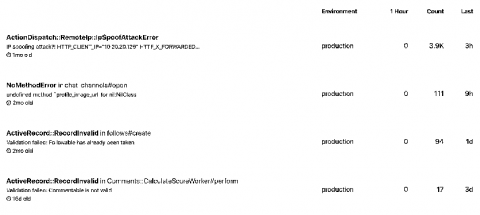
Are you on DEV? Did you know that it's open-source, and that it uses Honeybadger? We just launched a new feature to help communities like DEV fix more errors together! Software development is more fun with friends; that's why we've built tons of collaboration features into Honeybadger over the years, making it easier for teams to fix errors. Recently the team at DEV emailed us with a feature request: could we make it easier to involve the broader DEV open source community in the error-fixing process?
As reported cases of novel coronavirus (COVID-19) continue to rise around the world, many companies are increasingly shifting to using remote work as a way of minimizing exposure for their workforce. But even if some of these companies have been remote-friendly in the past, many organizations are currently struggling to figure out how to shift their operations to becoming entirely remote.
It’s been another brutal week. The coronavirus a.k.a. “Rona” as my teenage daughter and her friends call it, is just making things miserable for everyone. There have been significant impacts on the tech sector, along with oil and gas, finance, travel, hospitality, and many other industries. But there’s always a silver lining when disaster strikes. So let’s start on a positive note: many of us in information worker roles can work from home.
Automation is a powerful tool that can make processes more efficient and less expensive. You may think that automation tools are only accessible by large companies with significant resources. There are some cases when outsourcing complex tasks to professional consultants is the best options, such as website migration by cms2cms.com. However, other tasks can easily and effectively be achieved in-house with the help of automated tools.
So you’re using InfluxDB and Telegraf. Perhaps you’re writing over a million metrics points per second. Perhaps you’ve used Flux to do some data exploration. However, you now find yourself in a little bit of a pickle. You need to process and analyze this large amount of data, and you’d prefer to do that work in your favorite language with your go-to libraries.