Operations | Monitoring | ITSM | DevOps | Cloud

Shift Scheduling: 10 Signs You've Outgrown Spreadsheets (And What to Look for Next)

It’s Friday afternoon. Two employees have requested time off. Someone calls in sick. Another wants to swap shifts. Then you realize the only certified technician scheduled for the night shift is also marked as being on vacation. What looked like a perfectly organized spreadsheet this morning can quickly turn into a puzzle. As organizations grow, scheduling gets more complex.
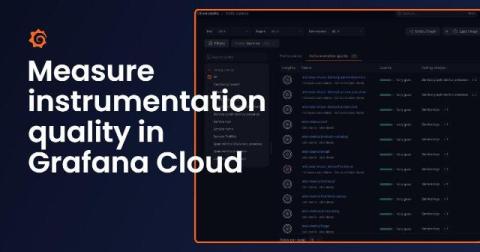
How to measure and improve instrumentation quality for better full-stack observability

Modern engineering teams instrument everything, with metrics, logs, traces, and profiles flowing from hundreds of services at once. But full-stack observability isn’t really about collecting more telemetry; it's about having a single, unified picture of how your services connect to every layer beneath them, including their dependencies, the pods and nodes they run on, and the logs, traces, and profiles that explain their behavior.

Debug live production code without redeploying with Datadog Live Debugger

Some production bugs don’t show up clearly in logs or traces, and they often cannot be reproduced in a local or staging environment. When developers need more runtime detail, they typically fall back on a familiar but slow workflow: add log lines, open a pull request, wait for review and CI/CD, deploy the change, and wait for the issue to happen again. If the new logs don’t capture the right variable values or execution path, the loop starts over.

When Intelligence Stops Being Scarce

As intelligence becomes increasingly accessible, competitive advantage shifts to the operational capabilities that transform insight into consistent, confident action. As AI makes operational insight easier to generate, competitive advantage is shifting to the platforms, workflows, and operational foundations that turn intelligence into trusted action.

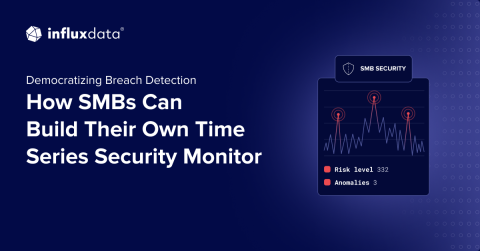
Democratizing Breach Detection: How SMBs Can Build Their Own Time Series Security Monitor

Summary Small and midsize businesses are often flying blind when it comes to security breach detection. An affordable way to address this issue without the complexity of SIEM is by modeling security events as time series data. This architecture takes audit logs from SaaS platforms and normalizes activities like logins, downloads, and token creation to establish behavior baselines that can be used to detect anomalies indicating security breaches. Table of Contents.

The Safest Place to Run an AI Agent Is On a Cluster That Doesn't Trust It

Every organization running AI agents has already made a hosting decision. Most made it by accident. The sales team switched on the agent built into their CRM. Engineering is piloting a coding agent in a vendor’s cloud. Someone on the data team deployed a LangGraph service to a VM with a database key in an environment variable, and someone else is running an agent framework on a laptop with production credentials in a dotfile. Each of these is a hosting decision.

Google Cloud Functions is now Cloud Run functions: what it is, and what it really costs

Google Cloud Functions is Google's serverless functions product, renamed Cloud Run functions in August 2024 and folded into the Cloud Run platform. You write event-driven code, Google runs it, and you pay per request, per vCPU-second, and per GiB-second after a free tier of 2 million requests a month. The catch: per-invocation billing scales your mistakes exactly as efficiently as it scales your product.

Supabase pricing: plans, free tier limits, and the bills AI is quietly creating

Supabase offers four plans: Free ($0, two projects, 500 MB database each), Pro ($25 per organization per month plus usage), Team ($599 per month, adds SOC 2 and SSO), and Enterprise (custom). The base fee is the floor, not the bill. Compute ($10+ per project), egress ($0.09/GB), storage, and monthly active user charges stack on top, so real production bills run $35 to $200 per month. In June 2026, a database company most CFOs had never heard of raised $500 million at a $10.5 billion valuation.