Operations | Monitoring | ITSM | DevOps | Cloud

Functional Programming vs. Object Oriented Programming

In current development, Object Oriented Programming has proven more popular than its predecessor Functional Programming. Functional Programming was developed before Object Oriented Programming, with support for Lisp, Clojure, Wolfram, Erlang, Haskel, F#, and R. Object Oriented Programming is more modern with support for C++, C#, Java, Python, Ruby. PHP, Perl, Objective-C, Swift, and Dart.

Apple in 2018, now Tesla-who's next in the line of internal data leaks?

Recent allegations of an ex-Tesla employee syncing the Autopilot source code to his personal iCloud account is yet another classic case of how poor data security is, even in some of the most technologically advanced organizations. The Tesla leak isn’t even the first time that a data breach of such immense magnitude pertaining to self-driving technologies has occurred; in July 2018, an Apple employee was caught using AirDrop to transfer 40GB of confidential data to a personal PC.

Daily Ignite Briefing: Highlights from day #3

Our third day was a bit of a different one. We started off the morning with a SCOM roundtable session that featured presentations from Microsoft, NiCE, Cookdown and SquaredUp. Later in the afternoon, our CEO and Founder Richard delivered a talk on “Mastering Azure Monitor”, and then as usual we did a couple customer briefings, a few customer case studies, and loads and loads of demos – also gave out loads of LEGO!

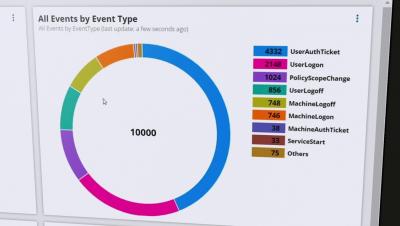
Interacting With Log Data in Security Event Manager

SolarWinds Security Event Manager is designed to give users a centralized view of logs and events occurring across their network, and quickly and easily recall specific logs and identify suspicious patterns and behaviors in that data. This video gives a quick overview of the features in SEM, making it easy for users to view and interact with their log data.

DevOps Patterns and Antipatterns for Continuous Software Updates at Velocity Berlin 2019

So, you want to update the software for your user, be it the nodes in your K8s cluster, a browser on user’s desktop, an app in user’s smartphone or even a user’s car. What can possibly go wrong? In this talk, we’ll analyze real-world software update fails and how multiple DevOps patterns, that fit a variety of scenarios, could have saved the developers. Manually making sure that everything works before sending an update and expecting the user to do acceptance tests before they update is most definitely not on the list of such patterns.