Operations | Monitoring | ITSM | DevOps | Cloud

How to Use an ER Diagram Tool to Design Relational Databases

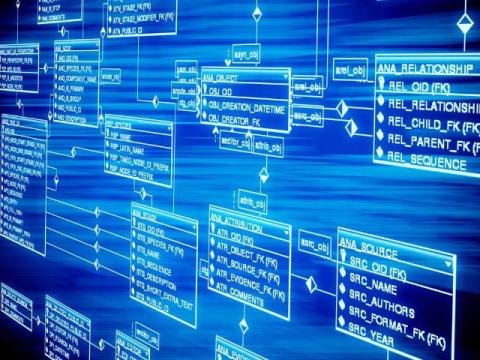
Database documentation often goes stale the same way. Someone draws a diagram during initial design and exports it to a wiki. The schema keeps changing, but the picture does not. Months later, a new engineer compares the diagram to the live database and has to work out which details are still accurate. The fix is to update documentation whenever the schema changes. An entity-relationship diagram (ERD), a visual map of tables and how they connect, can serve as both a design aid and a shared reference. It stays useful only if the team maintains it.


Upgrading the Operations Tech Stack at the Edge of Supply Chains

Warehouse management systems (WMS) and resource planning (ERP) platforms have undergone massive architectural shifts over the last decade. Microservices, event-driven cloud architectures, and real-time database synchronization have transformed how logistics organizations manage inventory levels, calculate safety stock, and track order fulfillment. Yet, despite millions invested in core IT infrastructure, operations architects frequently encounter a persistent data blind spot at the physical perimeter of the supply chain network: the loading dock.

Best Manufacturing Email List Providers in 2026

The short answer: the right manufacturing list depends less on record count than on what you sell. A CNC machine supplier needs plant managers and operations directors. A staffing agency needs HR at facilities with hiring pressure. Same industry, different lists, and a provider who cannot filter to that level is selling you the same file either way. Manufacturing looks like one market until you try to sell into it.

Enterprise AI governance framework: A practical guide to governing AI

AI adoption is accelerating across enterprises, but governance isn't necessarily keeping pace. As AI becomes part of everyday business workflows and applications, organizations need to understand where it is being used, what data it can access, and who is responsible for managing the risks. ManageEngine's shadow AI researchhighlights this challenge.

Cribl On Your Coffee Break Episode 16 - Dashboards

Welcome to the final week of Cribl on your coffee break, the series to help you get started with the Cribl platform. Today we’re going to cover the last of the "essential skills” in the Cribl platform: using and building dashboards. By the time the month is over, you will have a pretty good idea of what Cribl can do, and how to do it. You’ll also have consumed more caffeinated beverages than is strictly appropriate...

New in LightMesh: Cisco Meraki Integration

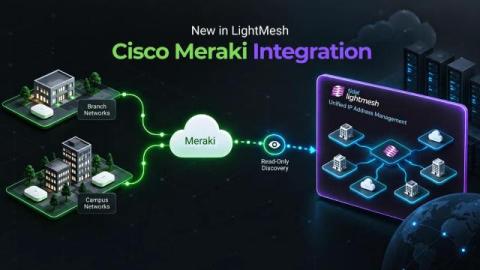
Some features start on a roadmap. Others start with a recurring customer request: Can LightMesh connect to Meraki? That request kept coming up. Now the answer is yes. LightMesh supports Meraki sites with multiple VLANs or a single LAN through the new cloud integration for Cisco Meraki. Appliance addressing from Dashboard syncs into LightMesh as subnets (with VLAN ID when Meraki provides one), and device or client LAN IPs only when they fall inside those CIDRs.

Challenging the Death of the IDE

There is no doubt that LLMs have changed how we work as developers. You can go back just a year from today and I would have had a very different opinion. But, things have changed significantly. Complex work usually involves just prompting an agent for it. You still need taste and opinions to steer it the right way. With that in mind, it’s easy to se that the future of the IDE might be uncertain.

One Graph, Every Worktree, No Context Lost

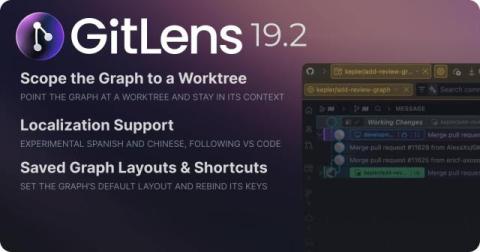
Five worktrees for five agents sounds like organization. In practice, it’s five contexts to keep straight, five places history could live, five spots for a WIP that gets left behind or diffed against the wrong branch. GitLens 19.2’s fix isn’t a second graph. It’s making the one graph you already trust point wherever the work actually is.

Understand the top paths users take to convert or drop off with Journey Paths

A funnel can tell you that 40% of users dropped off between checkout and payment. What it can’t tell you is what those users did instead, such as return to an earlier form field, leave the flow for a support page, encounter an error, or take another route entirely. Because actions and views between funnel steps don’t affect the conversion calculation, two very different experiences can produce the same funnel result.