In any rapidly emerging market, consultants can be a great source for vendor-neutral insights, as they typically work with multiple technologies to help their customers make informed decisions. In that vein, Derya (Dorian) Sezen of kloia, a new-era consulting organization that provides services toward transition of legacy workloads to frontline technologies in Cloud, DevOps and Microservices, recently wrote a blog summarizing his experience with Rancher and Red Hat OpenShift.
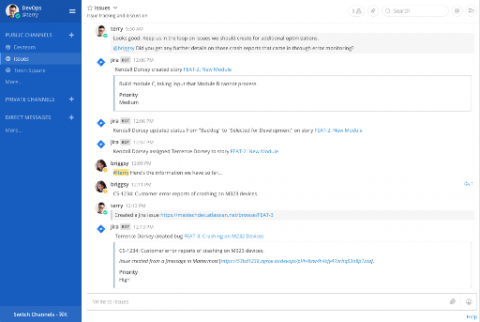
Jira is one of the most popular platforms to plan software development work and to track work. Teams use Jira to create user stories, create and assign tickets, document and track issues and bug fixes, and track the entire development cycle from conception to release. Jira is incredibly useful, but it can also create a lot of email notifications whenever stories or tickets are added, changed, reassigned, or resolved.
Serverless development opens lots of new opportunities, and if you’re invested in serverless (or you’ve been following the hype) you’ll know that cost efficiency is principal among those benefits. Simply put, we can save money by choosing the right tool for the right task. Since a distributed microservices architecture is made up of many managed services it’s a simple task to change out the building blocks of a particular application flow.
Logs from a variety of different AWS services can be stored in S3 buckets, like S3 server access logs, ELB access logs, CloudWatch logs, and VPC flow logs. S3 server access logs, for example, provide detailed records for the requests that are made to a bucket. This is very useful information, but unfortunately, AWS creates multiple .txt files for multiple operations, making it difficult to see exactly what operations are recorded in the log files without opening every single .txt file separately.
Elasticsearch and the rest of the Elastic Stack are commonly used for log and metric aggregation in various environments, including Kubernetes. In addition, the Elastic Stack is frequently being used for uptime tracking, with Heartbeat, as well as Application Performance Monitoring (APM), with agents supporting common programming languages, including Java.
This article originally appeared in TechBeacon. Gartner first coined the term "AIOps" a few years ago to describe "artificial intelligence for IT operations," and over the last few years, IT operations monitoring tool vendors have begun incorporating AIOps features into their products. Now AIOps tools are commonplace, but many IT leaders remain cautious about using these relatively new capabilities.