Operations | Monitoring | ITSM | DevOps | Cloud

Product Update - June 2026

IncidentHub's latest product update includes private status ingestion for Microsoft Azure and Microsoft 365, a simpler UI for alerts configuration, an option to disable the public status page, and a better looking status page layout. Plus, support for more vendors (1070+ and counting). As always, I am grateful to all our customers and beta testers who have shared their feedback which has made IncidentHub better.

How to Reduce MTTR: 5 Proven Strategies for Enterprise IT Teams

Every minute of downtime impacts your business. Mean Time to Resolution (MTTR) measures how quickly your team can resolve incidents and restore services. In this video, learn 5 proven ways to reduce MTTR using unified observability, AI-powered alert correlation, automated runbooks, and ITSM integration to resolve incidents faster and minimize downtime. In this video, you'll learn.

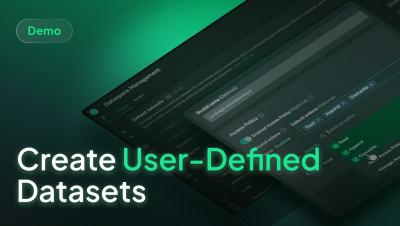
How to create User-Defined Datasets in Coralogix

Learn how to create a user-defined dataset in Coralogix and route telemetry data into it using TCO policies with granular DataPrime expressions. In this walkthrough, you'll learn how to:• Create a new dataset with its own schema, permissions, retention, and cost visibility• Configure PBAC settings for governed access control• Route data using DataPrime expressions in TCO policies• Fan out events to multiple datasets from a single source.

How Zero Trust is Reshaping Federal IT Strategy

Zero trust sparked a paradigm shift for federal agencies, changing the way they approach IT and data management as they "assume breach" from threat actors. Brian Chamberlain, Public Sector Business Development Lead at SolarWinds, explains how starting with observability helps federal agencies lay critical groundwork for meeting zero trust directives.

Shadow IT and Discovery AI Blind Spots: What Legacy Tools Miss

Ask three teams what assets exist in your environment, and you’ll get three different answers. Most organizations don’t lack tools. They lack agreement on what actually exists in their environment. Asset, endpoint and cloud data exist — but it’s fragmented, stale and trusted differently by teams across every department and function.

Find the Lookalike Domains Impersonating Your Brand: A Free Phishing & Typosquatting Scanner

Somewhere out there, a domain that looks almost exactly like yours may already be registered. Maybe it swaps one letter. Maybe it uses a Cyrillic character that is visually identical to a Latin one. Maybe it just adds the word "login" or "secure" to your brand. These lookalike domains are the raw material of phishing, and most companies have no idea how many exist for their brand until something goes wrong.

ClickHouse LowCardinality: When It Helps and When It Hurts

ClickHouse LowCardinality cuts storage and speeds up queries on low-cardinality columns, but backfires on trace IDs. How to tell the difference. Prathamesh works as an evangelist at Last9, runs SRE stories - where SRE and DevOps folks share their stories, and maintains o11y.wiki - a glossary of all terms related to observability.

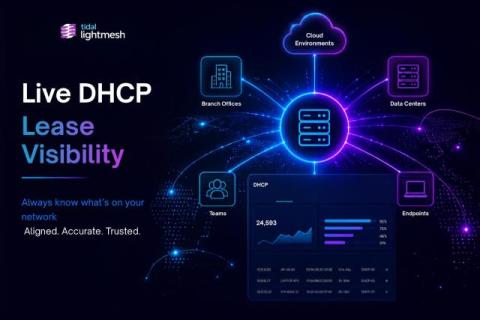
LightMesh DHCP Integration: Always Know What's on Your Network

Dynamic Host Configuration Protocol (DHCP) activity changes faster than most IP inventory systems can keep up. Devices reconnect. Leases expire. Infrastructure changes constantly across servers, endpoints, and cloud environments. If your IP inventory cannot reflect those changes automatically, teams quickly lose confidence in the data they rely on to operate the network.

Python Error Tracking for Django, Flask, and FastAPI: A Practical Setup Guide

Your Python app is throwing errors in production right now. Some of them are obvious: a 500 response, an angry Slack message from support. But most are quiet. A background task swallows an exception. A race condition surfaces only under load. A third-party API returns unexpected data and your code handles it by not handling it. If you’re relying on log files and user reports to find these, you’re debugging after the damage is done.