AWS CloudWatch allows you to collect log files such as the Apache2 access or error logs from your AWS EC2 instances. This is especially useful if you have a scaling group of instances behind a load balancer. Rather than connecting to each instance and manually searching the logs with grep, CloudWatch centralises the logs into one log stream, allowing you to search all your log files from one place.
Launched at KubeCon North America last December, Loki is a Prometheus-inspired service that optimizes storage, search, and aggregation while making logs easy to explore natively in Grafana. Loki is designed to work easily both as microservices and as monoliths, and correlates logs and metrics to save users money. Less than a year later, Loki has almost 6,500 stars on GitHub and is now quickly approaching GA.
Service mesh provides a dedicated network for service-to-service communication in a transparent way. Istio aims to help developers and operators address service mesh features such as dynamic service discovery, mutual transport layer security (TLS), circuit breakers, rate limiting, and tracing. Jaeger with Istio augments monitoring and tracing of cloud-native apps on a distributed networking system.
Amazon recently announced EventBridge to much fanfare. Although, in truth, it’s a rebranding of the existing CloudWatch Events service, along with some new features. But rebranding might be exactly what this old dog needs!
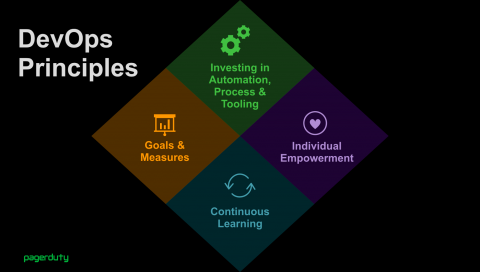
Many organizations are transitioning to DevOps, a software practice where developers both write and operate their code. This transition is often driven by digital transformation and the need to innovate faster while being always on, 24/7. But what does DevOps have to do with diversity, inclusion, and belonging?
Our databases are the ones that keep the Internet alive. There has even been talk for some years about the development of operating systems with which users do not have direct contact with the files, but their personal files are stored in a local DB. In fact, we already see how there are online services that do this for us, such as Google Drive or Nextcloud, the latter written under free license Affero.
The Velocity conference happened recently, and as part of it we (Honeycomb) hosted a sort of reverse-panel discussion, where you talked, and we listened. You may be aware that we’re in the process of developing a maturity model for the practice of observability–and we’re taking every opportunity we have to ask questions and get feedback from those of you who are somewhere along the path.