Operations | Monitoring | ITSM | DevOps | Cloud



7 Key Considerations for Kubernetes in Production
Today Enterprise IT does not question the value of containerized applications anymore. Given the move to adopting DevOps and cloud native architectures, it is critical to leverage container capabilities in order to enable digital transformation. Google’s Kubernetes (K8s), an open source container orchestration system, has become the de facto standard — and the key enabler — for cloud native applications, and the way they are architected, composed, deployed, and managed.

On-Prem or Cloud? A Decision in Light of Security and Compliance
When an organization is ready to deploy a new solution, or build a new system, there is often a continuing discussion about the relative merits of using the cloud versus deploying on-premises. While there are a number of aspects that play into this decision, it is not always clear which is the better solution for security and compliance. Typically, deployment issues are not clear because security and compliance solutions quickly change when you are using shared vs. dedicated environments.

ManageEngine wins at Future Network Awards-for the third time!
ManageEngine has added another gem to its crown, winning the Future Network Awards’ “Network Management and Monitor Vendor of the Year” award for the third time.

The Truth Is Out There - Anomaly Detection in DPA - SolarWinds Lab #75

Everything You Need to Know About the OSS Licensing War, Part 3.
In Parts One and Two of this blog, we looked back at the ongoing open source licensing wars, focusing on the evolving situation between Elastic N.V. and AWS. In this final installment, we’ll offer some opinions on the situation, as well as share our own views on how we’re reacting at Grafana Labs.

Introducing Subscribers for status pages
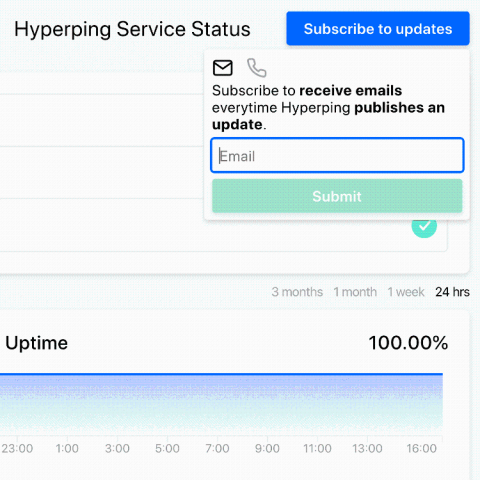
Your users are now able to subscribe to your status page to receive emails every time you publish an update during incidents! This feature, alongside the Incidents one, is only available starting the Pro plan. If you're on the basic plan, let me know in the chat or by email if you want to try out those new features!
Comparing kube-proxy modes: iptables or IPVS?
kube-proxy is a key component of any Kubernetes deployment. Its role is to load-balance traffic that is destined for services (via cluster IPs and node ports) to the correct backend pods. Kube-proxy can run in one of three modes, each implemented with different data plane technologies: userspace, iptables, or IPVS. The userspace mode is very old, slow, and definitely not recommended! But how should you weigh up whether to go with iptables or IPVS mode?

Canary Deployment with LaunchDarkly and AWS Lambda
LaunchDarkly has built an impressive feature flag management system that overages more than 200 billion feature flags per day. It has helped companies implement continuous deployment, A/B testing, infrastructure migrations and much more. It also enables canary launches (or dark launches) through its built-in support for percentage-based rollouts.