Operations | Monitoring | ITSM | DevOps | Cloud

5 tips for ramping up on remote work in a hurry

If you think of it in terms of Tuckman’s stages of team development, suddenly shifting to remote en masse throws your team into “storming” mode. Confusion and frustration abound, and everything feels twice as hard as it should. (We know because we’ve been there.) Your goal right now is to get back to the “performing” stage and resume your regularly-scheduled level of productivity. Here are five ways to do that.
New Relic vs. Scout: which is right for you?

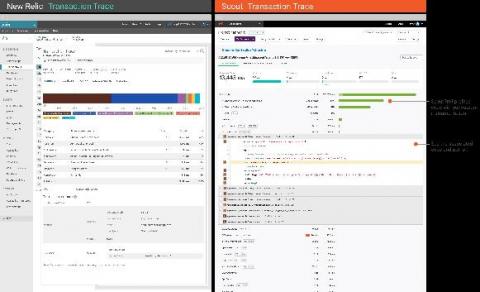
There's no type of monitoring tool that can get to the heart of a performance problem faster than Application Performance Management (APM). If you're making this decision, you may be choosing between New Relic and Scout. There are cases where New Relic is a better fit, clear cases where Scout fits like a glove, and some murky situations as well. Where do you fall? Below, I'll summarize the factors to consider when choosing your best APM product.

How to visualize data with Azure Monitor

So far, we’ve learnt how to collect data (part 2) and pull it into Azure Log Analytics (part 3), as well as how to actually work with the data using Kusto (part 4). Now it’s time to explore how we can visualize this data, make dashboards, share them with other teams in our organizations and so on. Unfortunately, dashboarding in Azure is not very sophisticated, and neither is it centralized.

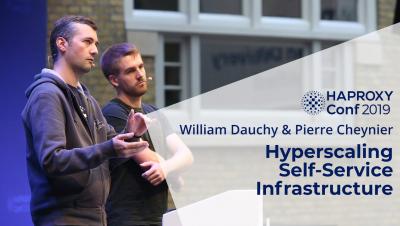
HAProxyConf 2019 - Hyperscaling Self-Service Infrastructure with William Dauchy & Pierre Cheynier

At Criteo, we work at the cutting edge of commerce marketing, using Machine Learning and Artificial Intelligence to help our customers grow their businesses through hyper-relevant advertising. We run tens of thousands of servers, host containers that continuously move across data centers, and scale services through our managed APIs, with HAProxy playing a critical role across our fast-paced, event-driven infrastructure. This presentation will describe our journey to achieve load balancing served via a user-centric API in such a large and complex environment. We will share tricks and design considerations that helped us to go from a user intent expressed through an API to a scalable service running globally.

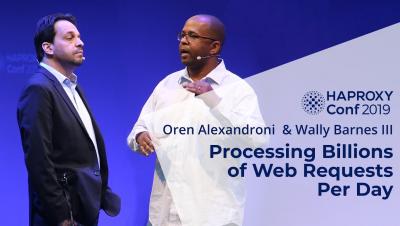
HAProxyConf 2019 - Processing Billions of Web Reqs Per Day by Oren Alexandroni & Wally Barnes III

DoubleVerify authenticates the quality of digital media for the world’s largest brands. We use HAProxy to accomplish our goals of processing billions of requests daily, increasing and decreasing load balancer pools without affecting customers, and avoiding downtime during upgrades and maintenance periods. We will share our criteria we used when we set out to move from hardware to software load balancers, how we arrived at the decision to use HAProxy, and the results we’ve seen before and afterwards.

Better IT Insights Lead to Better Outcomes for Organizations

I’ve always been a huge fan of mystery novels and true crime stories. It seems true crime is having an especially big moment right now, from serial killer documentaries to podcasts. Like so many people, I find myself drawn in as I read, watch, or listen to the criminal investigation. It’s fascinating how detectives work, diving into the smallest of details to solve massive crimes.

How to Create DevOps Pipelines That Work

DevOps is a software development practice that combines development and operations teams. When organizations use DevOps, they typically also use agile methodologies for managing and completing projects. The combination of DevOps and agile practices enables teams to build software faster and more efficiently. One of the primary tools of DevOps is the continuous integration/continuous delivery (CI/CD) pipeline.

Grow your blame-free culture with these postmortem best practices

Bugs will happen from time to time. As our systems grow in complexity, new functionalities mean new risks. What makes or breaks a team is not only how it handles incidents, but also how it learns from them. This is where incident postmortems come into the picture.

In A Fast Changing World, Peer Benchmarks Are A GPS

As businesses transform their traditional business models into new digital ones, and aggressively compete for turf within the digital economy, their constant pursuit of competitive edge drives technology, process, and architectural innovations. As a result, it seems that every 18 months a technology paradigm shift comes about that enables better agility, lower cost, improved quality of service, better intelligence and more.