Operations | Monitoring | ITSM | DevOps | Cloud

VictoriaMetrics bolsters move from monitoring to observability with VictoriaLogs release

Today we’re happy to announce our new open source, scalable logging solution, VictoriaLogs, which helps users and enterprises expand their current monitoring of applications into a more strategic ‘state of all systems’ enterprise-wide observability. Many existing logging solutions on the market today offer IT professionals a limited window into live operations of databases and clusters.

FireHydrant Private Incidents & Runbooks: more control for you, more security for your customers

Ensuring the privacy and security of sensitive information is crucial no matter your company's size or industry. So when an incident comes up that includes sensitive information — Personal Identifiable Information (PII), financial data, accidental data breaches, or legal matters requiring privileged communication — your response process might need a higher level of security and discretion.

WhatsUp Gold 2023.0: Greater Transparency and Wider Access to Network Data

One of the greatest challenges for an IT team is visibility. How can you prove the value of your IT team’s accomplishments when no one can see what – or how well – you’re doing? Progress WhatsUp Gold release 2023.0, available as of June 21, 2023, is set to change that. This release includes several exciting updates meant to provide better data access to all.

CFEngine 3.22 released - Coordination

Today, we are pleased to announce the release of CFEngine 3.22.0! The focus of this new version has been coordination. This is a non-LTS (non-supported) release, where we introduce new features for users to test and give feedback on, allowing us to polish before the next LTS.(CFEngine 3.24 LTS is scheduled to release summer 2024).

N-sight PME Update-Exploring Granular Patch & Best Practices

The Patch Management Engine (PME) in N-able N-sight RMM has been updated! I cannot stress how excited I am for granular patching. With the ever-changing security landscape in today’s world, we need more control over patching than ever. In this blog, I will quickly review the PME updates and give some quick-hit best practices that have served me well in the real world.

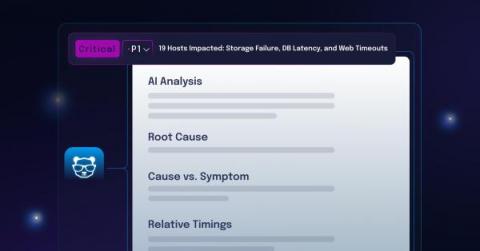
New related incidents functionality brings order to the chaos of highly complex incidents

We’ve all been there. You’re working through some rather frustrating blockers during an incident only to discover that you don’t own the dependency at fault. Or, you’ve been pounding away at an issue when a fellow engineer reaches out and asks if your service is affected by some particularly gnarly database failure they’re seeing. But then what? Do you merge efforts and work in parallel or head for a coffee break while the issue gets attacked upstream?