Operations | Monitoring | ITSM | DevOps | Cloud

Open Source AI Agent for SRE: Why AURA Is Free

The most common question since we started 31 Days of AURA: how do you plan to make money? The short answer is the control plane, not the agent. Mezmo sells an enterprise-grade control plane for running large numbers of agents across large environments, where coordinating across environments, governance, access control, and the efficiency of preprocessing MCP data start to matter. If a hundred people run AURA and three or four of them need that, the model works. The more people running AI agents in production, the bigger the market for the tooling underneath them.

GitKraken Desktop 12.4 Release: Multiple WIPs, Approve/Deny Agents, and more!

What if you could counterspell an agent action? GitKraken Desktop 12.4 pulls the whole AI agent workflow into one place, so you stay in the flow. Back in 12.0 we shipped Agent Sessions, where you kick off AI coding agents right inside the context of your repo. GitKraken 12.4 builds on that. What's new in 12.4: This release is not about handing more of your work to agents. It's about seeing everything they do, and deciding what actually changes.

Cut AI coding defects by 33% #mcpserver #aicoding #aiagents #grafana #aitools

We spend thousands of dollars "token maxing" and running endless debugging cycles just to walk our LLMs through a problem. But is the AI actually failing, or are we just withholding the right environment? Giving your AI assistant its own sandbox to test hypotheses might just be the missing link in your development workflow.

Just ask AI to add OpenTelemetry to your code

OpenTelemetry instrumentation used to mean hours of manual work, wiring up metrics service by service. Now you can just ask for it. Tell an AI agent what you're trying to observe, something like "add OpenTelemetry so I can track this application's performance," and it turns that into an intent specification, then enriches your existing code with instrumentation to match. OpenTelemetry is open source and on GitHub. Pairing it with an AI agent that actually understands your codebase is what turns "add some metrics" into instrumentation that's useful.

Creating Your 2027 IT Roadmap

We’re back with another roadmap stream! You might think to yourself, “Talking about 2027 already? Isn’t that a bit early? I’m still sweating and lying out by the pool!” But planning this far ahead will give you plenty of time to sort out priorities, talk to relevant parties, set your budget(s), and more. Having these discussions in August may feel extreme but the leaves will fall and the snow will pile up before you know it, so you might as well get started now!

Publicly available doesn't mean safe to pull right now

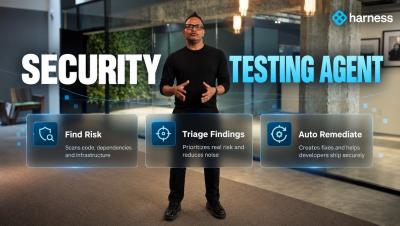
Open source is the backbone of most software. But should developers trust OSS? npm, PyPI, and Maven don't vet packages before publication, so "publicly available" doesn't automatically mean "safe to pull right now." A secure OSS posture is to trust the ecosystem but verify at ingestion: route packages and dependencies through a controlled layer that runs scanning, age checks, and malware detection before anything reaches a build.

AI's BIGGEST Problem, They're Losing Money!

For every $1 you pay OpenAI or Anthropic, it's costing them about $1.60. AI is running at a loss — so is the whole business model broken? The full bill for AI hasn't landed yet. In this ShipTalk short, Field CTOs Adam and Martin break down the economics of generative AI: why the frontier labs lose money on every prompt, why they'd need to raise prices ~60% just to break even, and the bet the entire industry is making — that inference costs drop fast enough to catch up. Plus the Gartner forecast every CFO should see: by 2028, the AI bill could be bigger than the employment bill.