Operations | Monitoring | ITSM | DevOps | Cloud

From Commit to Approval, Without Leaving VS Code | Harness Blog

The Harness VS Code Extension is now on the Marketplace. Monitor pipelines, debug logs, approve deployments, and query failures with Claude Code, Copilot, or Cursor, without leaving VS Code. Your Harness pipelines, logs, and deployment approvals are now a sidebar panel away inside VS Code. The Harness VS Code Extension is live on the VS Code Marketplace today, no.vsix download, no manual install.

What is RDMA over Converged Ethernet (RoCE)?

Previous articles walked through RDMA (Remote Direct Memory Access) as a programming model and InfiniBand as the fabric that was built around it. Both led to the same conclusion, even if it was never stated outright: moving data, not compute, becomes the bottleneck once systems scale. So what happens when you want RDMA, but you’re already running an Ethernet network you’re not keen to replace? That’s usually where RDMA over Converged Ethernet (RoCE) enters the conversation.

Why Most Organizations Still Don't Know What's Protected

Organizations invest heavily in cybersecurity tools, yet many still struggle to confidently understand what is actually protected across their environment. This blog explores how disconnected systems, unknown assets, and inconsistent data create blind spots, and how Teneo’s Cyber Asset Attack Surface Management (CAASM), powered by ThreatAware, helps organizations gain a trusted view of security coverage.

How Much Time Are Security Teams Wasting Reconciling Data Across Tools?

Security teams today are managing growing volumes of cybersecurity data across increasingly complex environments. This blog explores the hidden operational cost of disconnected tools, manual data reconciliation, and fragmented reporting, and how Teneo’s Cyber Asset Attack Surface Management (CAASM), powered by ThreatAware, helps organizations create a more unified and trusted view across their security estate. Most organizations are not short of security tools.

Building a Predictive Maintenance Plugin with the InfluxDB 3 Processing Engine

Predictive maintenance is one of the most compelling use cases for time series data. Instead of waiting for equipment to fail or servicing it on a fixed calendar regardless of condition, you watch the live sensor data and act when it indicates that a failure is coming. That “watch the data and act” loop is exactly what the InfluxDB 3 Processing Engine was built for.

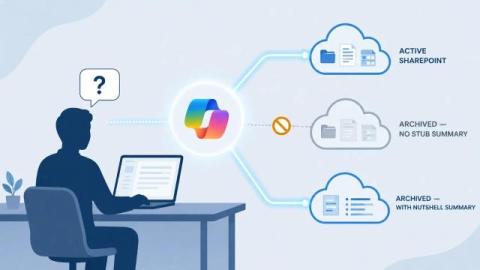
From API to live dashboard - building a SquaredUp plugin with AI

No matter how fast we build, we'll never integrate with every tool. There are too many, new ones appear constantly, and some are too niche to ever reach the top of our roadmap. So if the tool you care about isn't supported yet, your options have been to wait for us to get to it, or build it yourself with our Web API plugin — a powerful, flexible option, though one that asks you to map out the endpoints, authentication and paging yourself.

Building Enterprise Momentum Across APAC: A Conversation with Dave Patnaik

There’s a lot happening across Asia Pacific right now. Enterprises are moving quickly to modernize operations, adopt AI, and manage growing complexity across increasingly distributed environments, and the opportunity ahead for LogicMonitor in the region continues to grow alongside it. That’s why I’m especially excited to welcome Dave Patnaik to LogicMonitor as our new Vice President of APAC.

Devolutions Makes an Important Investment in Obkio

Obkio is proud to announce an important investment from Devolutions, one of the most respected names in IT security and remote access management. This investment marks a new chapter for Obkio as we accelerate our next phase of growth. This isn't a financial transaction between strangers. It's a partnership between two companies that have spent years building tools for the same people: IT professionals, sysadmins, MSPs, and the network engineers who keep critical network infrastructure running.

Coding Agents Write the Code. Who Verifies It Works? We Built the Answer.

Coding agents are good at reading a spec and producing code. But producing code is one step in a longer process. The real loop is Spec -> Code -> Deploy -> Test -> Verify -> Ship. Agents stop at step two. Romaric founded Qovery to make Kubernetes accessible to every engineering team. He writes about platform strategy, developer experience, and the future of cloud infrastructure.