Operations | Monitoring | ITSM | DevOps | Cloud

Introducing Grafana Enterprise Traces, joining metrics and logs in the Grafana Enterprise Stack observability solution

Today, we are launching a new Grafana Labs product, Grafana Enterprise Traces. Powered by Grafana Tempo, our open source distributed tracing backend,.and built by the maintainers of the project, this offering is an exciting addition to our growing self-managed observability stack tailored for enterprises.
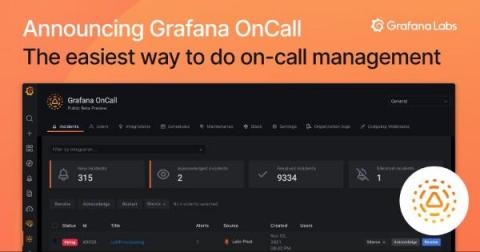
Announcing Grafana OnCall, the easiest way to do on-call management

A critical part of managing modern software development is setting up and running an on-call rotation. But that often involves significant toil, in part because many of the existing tools are cumbersome and not developer-friendly. That’s why we’re excited to announce Grafana OnCall, an easy-to-use on-call management tool that will help reduce toil in on-call management through simpler workflows and interfaces tailored for devs.

ObservabilityCON 2021: Your guide to the newest announcements from Grafana Labs

This morning during the ObservabilityCON keynote, we announced some of the exciting projects and feature enhancements we’ve been working on for our customers and community. And it doesn’t end there. Throughout the week, we’ll continue to unveil new features, go deeper with live demos, and share our plans to shape the future of observability. With so many new announcements and features to check out, we want to make sure you know where to get more details about these developments.

How Puppet provides cyber security resilience to customers

You only have to read regular news reports about the multiple outages across household names in banking and financial services, resulting in customers being unable to access their bank accounts, to know that cyber security resilience has never been more important and is on every organization’s radar. The threat of regulatory action, heavy fines, and the potential loss of banking licenses is very real.

New Relic vs. Sentry vs. Scout

In the digital economy, software applications have become a primary product for a large number of companies. On top of that, customers expect a flawless user experience from the applications as it evolves. To provide such a great experience, companies need to have powerful performance monitoring across their applications. We will discuss APM tools that are popular in the market right now and compare them in different aspects. Feel free to use these links to navigate the guide.

Limit Coralogix usage per account using Azure Functions

At Payoneer, we use Coralogix to collect logs from all our environments from QA to PROD. Each environment has its own account in Coralogix and thus its own limit. Coralogix price modules are calculated per account. We as a company have our budget per account and we know how much we pay per each one. In case you exceed the number of logs assigned per account you will pay for the “extra” logs. You can see the exact calculation in this link.

Infrastructure as Code, part 2: build Docker images and deploy to Kubernetes with Terraform

This series shows you how to get started with infrastructure as code (IaC). The goal is to help developers build a strong understanding of IaC through tutorials and code examples. In this post, I will demonstrate how to how to create a Docker image for an application, then push that image to Docker Hub. I will also discuss how to create and deploy the Docker image to a Google Kubernetes Engine (GKE) cluster using HashiCorp’s Terraform.

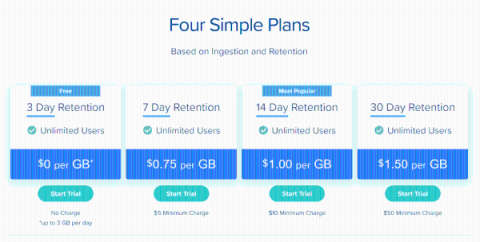
What's Wrong With Observability Pricing?

There’s something wrong with the pricing of observability services. Not just because it costs a lot – it certainly does – but also because it’s almost impossible to discern, in many cases, exactly how the costs are calculated. The service itself, the number of users, the number of sources, the analytics, the retention period, and extended data retention, and the engineers on staff who maintain the whole system are all relevant factors that feed into the final expense.