Operations | Monitoring | ITSM | DevOps | Cloud

Is Kubernetes Monitoring Flawed?

Kubernetes has come a long way, but the current state of Kubernetes open source monitoring is in need of improvement. This is in part due to the issues related to an unnecessary volume of data related to that monitoring. For example, a 3-node Kubernetes cluster with Prometheus will ship around 40,000 active series by default. Do we really need all that data?

Connecting OpenTelemetry to AWS Fargate

OpenTelemetry is an open-source observability framework that provides a vendor-neutral and language-agnostic way to collect and analyze telemetry data. This tutorial will show you how to integrate OpenTelemetry with Amazon AWS Fargate, a container orchestration service that allows you to run and scale containerized applications without managing the underlying infrastructure.

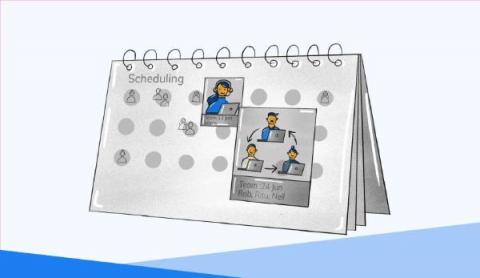
Announcing our improved Schedules & On-Call Rotations

Hey folks! We are super excited to announce that our schedules feature has gone through a bit of an update. Well, more than a bit 🙂. We’ve gone through the feature with a fine-toothed comb and introduced a bunch of UI and functional improvements which we hope will help you achieve one thing: set up, edit and manage your on-call schedules at scale in a matter of minutes (Yes, that was three things but it was tough to condense it to ONE thing)

Root cause log analysis with Elastic Observability and machine learning

With more and more applications moving to the cloud, an increasing amount of telemetry data (logs, metrics, traces) is being collected, which can help improve application performance, operational efficiencies, and business KPIs. However, analyzing this data is extremely tedious and time consuming given the tremendous amounts of data being generated. Traditional methods of alerting and simple pattern matching (visual or simple searching etc) are not sufficient for IT Operations teams and SREs.

The business value of frequent deployments: Recouped time

The first post in this series introduced the idea of the different layers of value that your business can gain from frequent deployments and focused on the hard costs you can save. We’re looking at the role the database plays here because it’s the most complicated part of the process and it’s difficult to hit aggressive KPIs and goals when your teams are burdened with process bloat due to mistake-prone, manual work.

SRE Report 2023: Findings From the Field - Toil

Toil. Few other words have the same visceral impact for SREs as their four-letter nemesis: toil. Although pretty much everyone recognizes and agrees that toil is bad, it is a term that is frequently misused in colloquial use. In common English usage, toil is defined as “long strenuous fatiguing labor”. As a term of art in the SRE profession, “toil” has several very specific characteristics which distinguish it from other sorts of work which people spend time on.

AppSignal for Elixir Now Supports Oban

If you're using Oban for managing background jobs in your Elixir application and want to gain a deeper data-driven understanding of how they perform, you've come to the right place. AppSignal for Elixir now automatically instruments Oban, meaning you can now monitor the performance of your background jobs through an AppSignal Magic Dashboard, which gives you detailed information on queue times, processing times, and notifies you of any exceptions.

Get to know TraceQL: A powerful new query language for distributed tracing

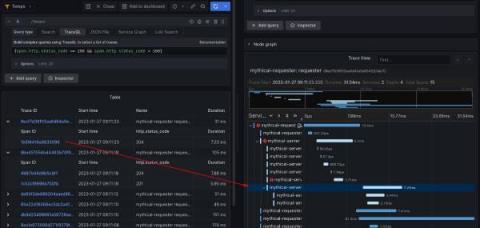
At Grafana Labs, we love tracing, which is why we’ve been hard at work on Grafana Tempo, an open source, highly scalable distributed tracing backend. Tempo just had its 2.0 release. In conjunction with that release, we are excited to show off TraceQL — a powerful new query language designed for distributed tracing. In this blog, we’ll provide an overview of why we created TraceQL, how it works, how you can put it to use today, and what we have planned for future iterations.

Using Hyperconverged Infrastructure for Kubernetes

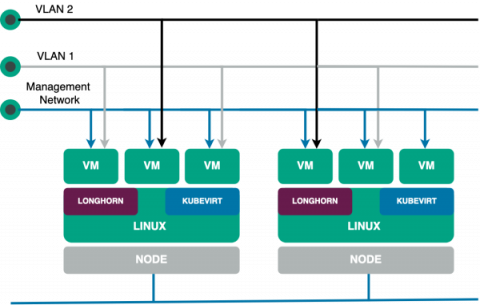
Companies face multiple challenges when migrating their applications and services to the cloud, and one of them is infrastructure management. The ideal scenario would be that all workloads could be containerized. In that case, the organization could use a Kubernetes-based service, like Amazon Web Services (AWS), Google Cloud or Azure, to deploy and manage applications, services and storage in a cloud native environment. Unfortunately, this scenario isn’t always possible.