Operations | Monitoring | ITSM | DevOps | Cloud

How Delivery Hero uses Kubecost and Datadog to manage Kubernetes costs in the cloud

As the world’s leading local delivery platform, Delivery Hero brings groceries and household goods to customers in more than 70 countries. Their technology stack comprises over 200 services across 20 Kubernetes clusters running on Amazon EKS. This cloud-based, containerized infrastructure enabled them to scale their operation to support increasing demand as the volume of orders placed on their platform doubled during the pandemic.

How 3 Companies Implemented Distributed Tracing for Better Insight into Their Systems

Distributed tracing enables you to monitor and observe requests as they flow through your distributed systems to understand whether these requests are behaving properly. You can compare tiny differences between multiple traces coming through your microservices-based applications every day to pinpoint areas that are affecting performance. As a result, debugging and troubleshooting are simpler and faster.

How Splunk Users can Maximize Investment with CloudFabrix Log Intelligence

Good people over at Splunk explain that the platform “removes the barriers between data and action, empowering observability, IT and security teams to ensure their organizations are secure, resilient and innovative.” Splunk is a unified security and observability platform that allows companies to go from visibility to action quickly and at scale.

March MSP Growth Habit: Open New Doors with Co-managed IT

Welcome to March! It’s a new month with a new MSP growth habit to start focusing on. In January, I encouraged you to Never Stop Learning to kick off our list of 12 MSP growth habits. In February, I urged you to go out and Find Love in the form of updating your MSP’s social proof for your website and social media feeds. For March it’s all about stepping out of your comfort zone and exploring new market opportunities to help expand your MSP business.

Why is Icinga called Icinga?

It’s the year 2009, a nice weekend in late spring and a small group of monitoring enthusiasts comes together to discuss how to move forward with the idea of forking Nagios. The Icinga team in 2009, just to set the mood. Plans were made to make it faster, easier, more scalable, and simply better. Of course, such a project has a lot of hurdles to take – the most important one was of course: the name.

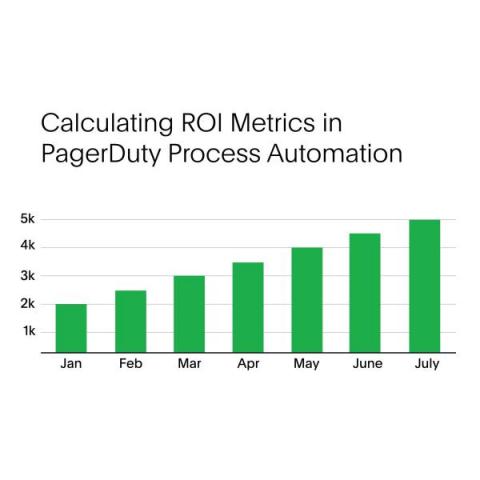
Calculating Business Value of Automation in PagerDuty Process Automation

Budgets in IT departments are tight these days, so proving a return on investment is essential for justifying or expanding a project. The good news is that automation saves money by reducing the amount of human effort required. It is similar to investing in a robot vacuum cleaner. Despite the upfront cost, you save time (and money) by not having humans do the vacuuming. Reporting the value delivered by an automation program can be challenging since the value depends heavily on what is being automated.

Monitoring with Custom Metrics

By kickstarting a monitoring project with Prometheus, you might realize that you get an initial set of out-of-the-box metrics with just Node Exporter and Kube State Metrics. But, this will only get you so far since you will just be performing black box monitoring. How can you go to the next level and observe what’s beyond? They are an essential part of the day-to-day monitoring of cloud-native systems, as they provide an additional dimension to the business and app level.

How Synthetic Transaction Monitoring Provides Complete Site Visibility & Why Basic Monitoring is Not Enough

We’ve all been in the situation before: it’s Friday at 5 PM and the only on-call engineer available to handle incidents is about to hit the slopes. Unfortunately, at that very moment, a customer reports to support that they are unable to access the company’s ecommerce website to complete a purchase. Internal monitoring systems seem quiet and services appear available on internal health dashboards.

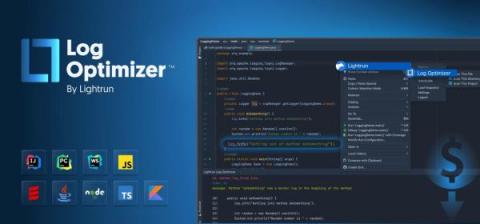
Reduce 60% of your Logging Volume, and Save 40% of your Logging Costs with Lightrun Log Optimizer

As organizations are adopting more of the FinOps foundation practices and trying to optimize their cloud-computing costs, engineering plays an imperative role in that maturity. Traditional troubleshooting of applications nowadays relies heavily on static logs and legacy telemetry that developers added either when first writing their applications, or whenever they run a troubleshooting session where they lack telemetry and need to add more logs in an ad-hoc fashion.

How Monitoring, Observability & Telemetry Come Together for Business Resilience

Systems going down because of an unforeseen incident? Got problems with your app or website? Is your audience missing out on products and services because your load times are too slow? Then monitoring and observability (and telemetry) should be of interest to you! In this long article, we’re covering everything! I’ll start with the concepts and how they work.