Operations | Monitoring | ITSM | DevOps | Cloud

From Spotify to Open Source: The Backstory of Backstage

Technology juggernauts–despite their larger staffs and budgets–still face the “cognitive load” for DevOps that many organizations deal with day-to-day. That’s what led Spotify to build Backstage, which supports DevOps and platform engineering practices for the creation of developer portals.
Elevate Customer-Facing Contact Centers with Nexthink

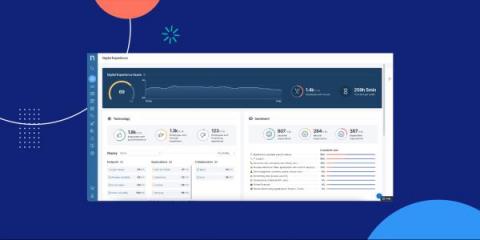
Contact centers (or call centers) are crucial touchpoints for customer interactions across various channels, including phone, email, SMS, live chat, and more. As businesses strive to deliver exceptional customer experiences (particularly in high-volume consumer-facing industries such as financial services, telecom, travel, insurance, healthcare, online retail, etc.), it’s imperative to optimize contact center performance. How imperative?

HAProxy Fusion 1.1 Enables Application Delivery at Scale

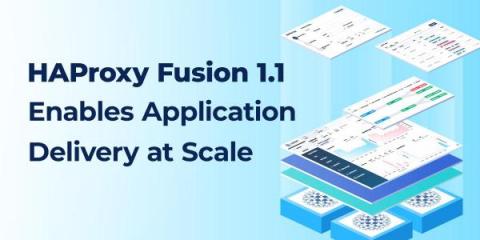
HAProxy Fusion Control Plane gives you power to simplify, scale, and secure your HAProxy Enterprise infrastructure using a centralized orchestration solution, making it easier to extend HAProxy Enterprise’s security and performance across on-premises and cloud-hosted applications. With the release of version 1.1, HAProxy Fusion is more secure, more flexible, and even easier to use.

What is Palo Alto Panorama?

Palo Alto Panorama is a network management system (NMS) that provides excellent security updates and static rules in a constantly changing world. The modern world is implementing more technology into our daily lives, so we need more creative and innovative solutions to protect our data and information. Implementing Palo Alto Panorama will reduce administrator workload by building a dashboard where you can monitor all of your IT operations in one place, in real-time.

5 Ways You Can Utilize Observability to Make Your Next Migration Easier

When people hear the word “migration,” they typically think about migrating from on-prem to the cloud. In reality, companies do migrations of varying types and sizes all the time. However, many teams delay making critical migrations or technical upgrades because they don’t have the proper tools and frameworks to de-risk the process.

ChatGPT and Elasticsearch: APM instrumentation, performance, and cost analysis

In a previous blog post, we built a small Python application that queries Elasticsearch using a mix of vector search and BM25 to help find the most relevant results in a proprietary data set. The top hit is then passed to OpenAI, which answers the question for us. In this blog, we will instrument a Python application that uses OpenAI and analyze its performance, as well as the cost to run the application.

ChatGPT and Elasticsearch: Faceting, filtering, and more context

In a recent blog post, we discussed how ChatGPT and Elasticsearch® can work together to help manage proprietary data more effectively. By utilizing Elasticsearch's search capabilities and ChatGPT's contextual understanding, we demonstrated how the resulting outcomes can be improved. In this post, we discuss how users’ experience can be further enhanced with the addition of facets, filtering, and additional context.

How Technology Optimizes Operations and Productivity in Small Businesses

Small businesses often face unique challenges when it comes to optimizing their operations and productivity. With limited resources and manpower, finding ways to streamline processes can be a game-changer. Fortunately, technology has provided us with solutions that can help small businesses overcome these hurdles and thrive in today's fast-paced business world. In this blog post, we'll explore how technological advancements have revolutionized the way small businesses operate by streamlining communication, automating routine tasks, enhancing project management and organization, improving data storage and accessibility, as well as enabling remote work flexibility.
Sponsored Post

What is an Internal Developer Platform (IDP) and Why It Matters

In today's evolving technological landscape, enterprises are under increasing pressure to deliver high-quality software at an accelerated pace. Internal Developer Platforms (IDPs) provide a centralized developer portal that empowers developers with self-service capabilities, standardized development environments, and automation tools to accelerate the software development lifecycle. In this week's blog, we're taking a closer look at internal developer platforms and how implementing IDPs is helping organizations overcome the complexity of modern software development and increase developer efficiency to accelerate the delivery of software products.