Monitoring the performance of an application is not a strange concept to most developers. At one point or another, we’ve all had to do some performance debugging of our own. Usually, it happens when there’s a big issue affecting the user’s experience or cost implications. Only then do we make time to look at how the app performs in different scenarios.
Table of Contents When an application written for the Java Virtual Machine is running, it constantly creates new objects and puts them on the heap. Well, at least in the vast majority of the cases. Such objects can have a longer or shorter life, but at some point, they stopped being referenced from the code. Unlike languages like C/C++, we don’t have exact control over when the memory will be freed – freeing the memory is the garbage collector’s job.
Table of Contents Uptime is the metric that measures perhaps the most critical aspect of your business, its availability. If you think about it, having a website that does many really cool things, paying tons of money on ads to bring people to it, and even spending all those hours on making your website look great won’t amount to anything if it doesn’t work.
Table of Contents Setting up and administering multiple servers for business and application purposes has become easier thanks to advancements in cloud technology. Today, enterprises are choosing to operate large numbers of servers both in the cloud and in their data centers to meet the ever-increasing demand. As a result of these changes, monitoring technologies have become crucial. In this post, we’ll explore the best server monitoring tools and software currently on the market.
The popular open-source platform Kubescape by ARMO has been recently announced as a fully managed operator called a Charm for Canonical’s Charmed Kubernetes distribution. This collaboration between Canonical and ARMO is exciting for the solution it enables for end users, ultimately resulting in hardened and more secure Kubernetes environments.
We are thrilled to kick start 2023 with an exciting announcement: Slight Reliability is now a part of SquaredUp! Keep reading to learn how this partnership began, in an exclusive interview snippet with our CEO Richard Benwell and Slight Reliability host Stephen Townshend.
DevOps has evolved in terms of its tools, techniques, and culture. Software developers can gain a completely new perspective when operations and development work together. The tech sector now depends heavily on DevOps. It is essential in enterprises, from software delivery to project planning. Businesses in DevOps employ a variety of monitoring tools for a range of activities, including development, testing, and automation.
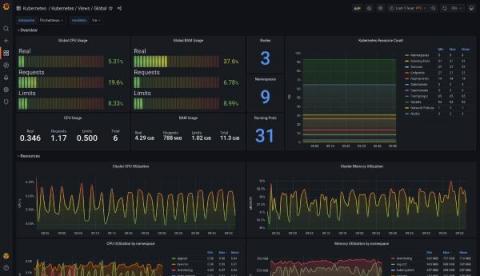
David Calvert is a site reliability engineer working remotely from the south of France. He’s currently focused on observability, reliability, and security aspects of cloud infrastructure. You can find him as dotdc on GitHub and @0xDC_ on Twitter. Over the past three years, I’ve built and operated Kubernetes clusters for two different companies — the first one on-premises, and the second on a public cloud platform for my current job at Powder.