Searching through endless Visio diagrams and Excel sheets is like looking for a needle in a haystack. The struggle is real when it comes to manual server discovery.
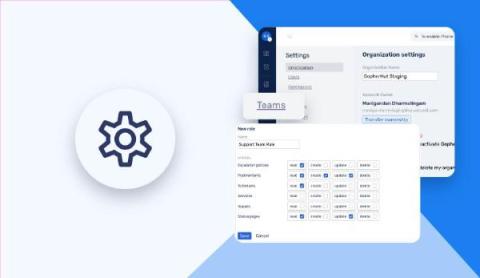
In a dynamic business landscape, organizations specifically Managed Service Providers (MSPs) often find themselves juggling the needs of multiple customers. It's crucial for them to maintain strict data segregation to prevent the mixing of customer information. Likewise, large organizations with distinct departments like the customer service or the technical department face similar challenges.
User experience and online presence are key to your business’s success—so monitoring and optimizing your website’s performance is non-negotiable. Downtime, slow load times, and unpredictable behavior will deter website visitors faster than a 404 error on your homepage. For that reason, Uptime.com offers a comprehensive suite of tools to keep your website running smoothly, efficiently, and reliably.
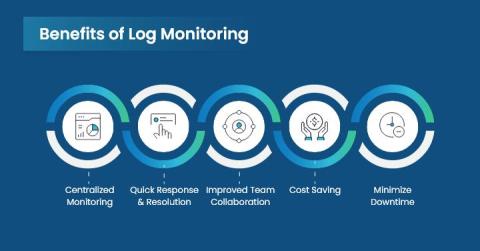
Log monitoring has become crucial nowadays as more than 90% of organizations use cloud services, containers, and other technologies to stay ahead of their competitors. This excessive adaption of the latest technologies and services is great for businesses but it also makes everything a bit more complex. Consequently, the volume, velocity, and diversity of logs rise exponentially as a result of this complexity.
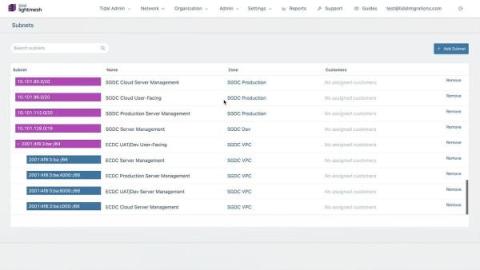
Here at Tidal, we have helped many organizations make the switch from SolarWinds to LightMesh. We developed our LightMesh IPAM (IP Address Management) solution to provide advanced automation and ease-of-use for network engineers. If you’ve considered migrating away from SolarWinds IP Address Manager, this post will walk through how to make the switch.
Whether you’re a remote worker or working for an international business, video conferencing platforms have become indispensable tools for businesses and organizations worldwide. Among them, Zoom is a VIP player, facilitating seamless virtual meetings and collaborations. However, as IT professionals well know, the efficacy of these digital gatherings can be compromised when confronted with network-related challenges.
The need for automation is becoming more important day by day. The process of integrating written code with already working code and publishing new code to live environments is a very error-prone process. Performing static analysis, running tests, packaging, and versioning are tasks that require a lot of manual effort. It’s also a complex task to solve the problem of deploying the projects we develop to more than one environment, on more than one machine, without automation.
It is the time of the year when we revisit our carefully written 2024 New Year resolutions list and frown at how we could not stick to it religiously. Letting the everyday demands of life and work get in its way. It isn’t amusing to realize we are not committed to our boldly written, heartfelt intentions. However, if you are a networking professional, we have the good news. You can ace your job as well as carve out the ‘me’ time to pursue your 2024 resolutions.
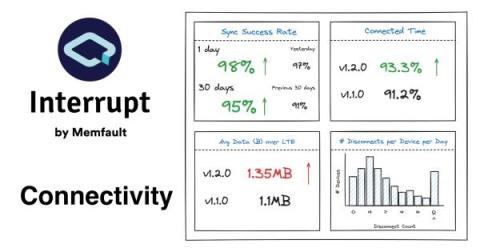
With the number of wireless SoCs on the market, “Just add connectivity” is finally a reality! “Just” does a lot of lifting in that phrase. Connectivity, whether wired or wireless, adds numerous layers of complexity to your device. Treating your connectivity as a black box early in development is easy, but this strategy will implode when thousands of devices enter the field - trust me, I know. It’s not enough to test from end to end a few times in the office.
Cloud computing has made provisioning new servers easy, fast, and relatively cheap. Almost anyone can log into a cloud console, spin up a new server, and deploy an application. And if they need greater uptime, major cloud providers include all kinds of settings, services, and configurations to add fault tolerance and failover. So why is it that many services fail when a single server instance fails?