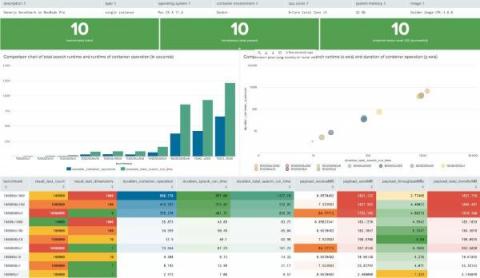
We are excited to share the latest advances around the Deep Learning Toolkit App for Splunk (DLTK). Earlier this year, Splunk’s Machine Learning Toolkit (MLTK) was updated with some important changes. Please refer to the blog post Driving Data Innovation with MLTK v5.3 and the official documentation to learn more about what changes were made and most importantly how they may affect you, especially if you run MLTK models in production.
You probably have heard of logging agents, such as Logstash or Fluent Bit, if you’ve been investigating log analysis, monitoring, and observability. If so, and you’re wondering what logging agents are and why you might need them, you’ve come to the right place. This article will look at what logging agents are for, their advantages, and what you can use instead of a logging agent.
SEO, or search engine optimization, has fundamentally transformed the way that companies manage and maintain their digital presence in the modern globalized economy. With the power of Google to direct potential customers to your business entirely based on your relevance to key search terms around your operations, knowing your SEO strengths and weaknesses is a must to keep up with your competition.
In today’s digital world, application responsiveness isn’t just an end-user desire but an expectation. Nobody understands the challenges of meeting these demands better than IT, which must remain poised to act when an issue occurs while also finding ways to innovate, improve, and implement continuously.
OpenTelemetry is a Cloud Native Computing Foundation (CNCF) initiative that provides open, vendor-neutral standards and tools for instrumenting services and applications. Many organizations use OpenTelemetry’s collection of APIs, SDKs, and tools to collect and export observability data from their environment to their preferred backend. As part of our ongoing commitment to OpenTelemetry, we are proud to have contributed our distributed tracing libraries to the CNCF community.