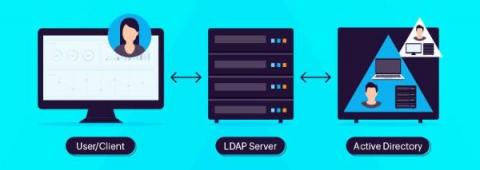
If you are a beginner on your Active Directory (AD) learning journey, then you must have stumbled upon the term LDAP. It’s quite possible that you feel a little lost trying to understand this concept. The objective of this blog is to get you comfortable with LDAP and more confident about your AD learning journey. To begin with, let’s address the subject head-on! What is LDAP?
Eventarc is a Google Cloud offering that ingests and routes events between GCP products, such as Cloud Run, Cloud Functions, and Pub/Sub, making it easy to build automated, event-driven workflows in complex environments. By taking care of event ingestion, delivery, authorization, and error handling, Eventarc reduces the development overhead that is required to build and maintain these workflows and helps you improve application resilience.
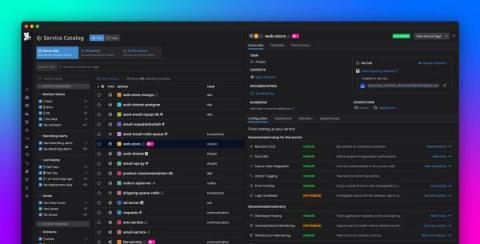
Moving from a monolith to microservices lets you simplify code deployments, improve the reliability of your applications, and give teams autonomy to work independently in their preferred languages and tooling. But adopting a microservices architecture can bring increased complexity that leads to gaps in your team members’ knowledge about how your services work, what dependencies they have, and which teams own them.
The explosion of APIs, devices, applications, and data sources has complicated the task of building connectivity across the enterprise. As organizations are connecting to applications outside of their four walls, they risk becoming fragmented. Moreover, existing on-premise systems, such as AS/400 and ERPs, need to be able to communicate both internally and externally.
Website performance is important as it directly impacts your business bottom line, this is why picking the right website monitoring service crucial! They perform regular tests and alert you whenever your site is down, making it easier for you to spot track down issues and solve them. There are lots of options out there from simple uptime monitoring or transaction monitoring to complex web performance monitoring solutions.
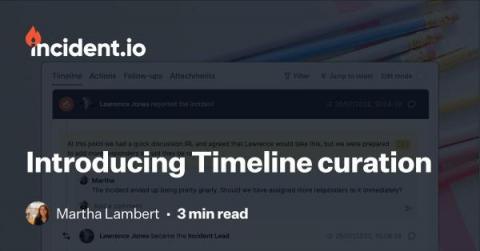
It isn’t the first time you’ve heard us say this and it won’t be the last: getting your post-incident process right is a game-changer. Being able to run effective debriefs and create useful postmortems helps us learn from our mistakes, respond better to future incidents and identify how we can build resilience in our product and teams. In short, it’s the thing the shifts the dial from just “fixing” to actually improving.
Today, we're launching ARM support for machines running Alpine Linux. This feature is available for our Ruby and Elixir users! We hope to add support for Alpine Linux ARM to our Node.js package in the future. The ARM CPU architecture is becoming more and more popular. As it powers people's development machines and production servers, we decided to add it to the list of the operating systems we support.