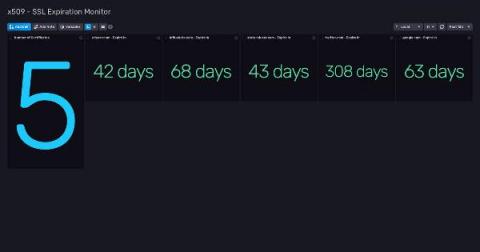
In my previous work experience, monitoring certificate validation was critical to our team. These certificates were used to sign commercial transactions between the payment gateway (us) and other providers. That check was manual and depended on the calendar of one person. So, if that person forgets to notify the team about the upcoming expiration of one certificate and doesn’t start the procedure of getting the new one, well, the platform starts to fail.
This blog is the second in a two-part series and was adapted from The Enterprisers Project. At a time when CIOs can use cloud infrastructure to turn on new money-making services for customers overnight, how should we measure IT success? Hint: It's not about uptime. In part 1 of this series, we talked about how traditional IT metrics such as server capacity, I/O, utilization, and network throughput are less relevant today in our highly-digital world.
In a previous post, we explored the basic concepts behind using Grok patterns with Logstash to parse files. We saw how versatile this combo is and how it can be adapted to process almost anything we want to throw at it. But the first few times you use something, it can be hard to figure out how to configure for your specific use case.
In the modern era of digital businesses, web applications need to deliver on several grounds–performance, user experience, robustness, and scalability. However, many developers might agree that performance is of the utmost importance in any software application. The bells and whistles of a fancy UI and extensive functionalities can sometimes force performance to take the back seat. Additionally, there are a lot of reasons for performance to degrade over time.
This article is a full tutorial on HAProxy monitoring and the best tools to get it done right. We will be looking into how to collect HAProxy metrics using a collectd daemon, push them into Graphite and visualize them in Grafana. To follow the steps in this blog, sign up for the MetricFire free trial, where you can use Graphite and Grafana directly in our platform.