Operations | Monitoring | ITSM | DevOps | Cloud

Grouping AWS Lambda functions with Dashbird Project View

One of the serverless best practices is one-purpose functions. You should keep your Lambda functions small and solve exactly one use-case. This way, you can optimize them better and keep potential security problems contained. But creating many small functions can get overwhelming quickly. Even small projects can end up with more than 20 Lambda functions.

Refine Your Observability Experience at Scale

Today, we announced that Refinery is now generally available. With Refinery, it’s now easy to highlight the critical debugging data you need and to stop paying for the rest. Refinery is a sampling solution that lets you control resource costs at scale without sacrificing data fidelity. Support for Refinery is now also included in Honeycomb Enterprise plans.

SRE Survey 2021: Where do we go from here

What a difference a year makes. In a matter of 365 days, the entire planet stared down at uncertainty, and while most of the world is far from recovered, we are starting to see a time where some level of normalcy will return. But what will this look like? How will the past year transform our social interactions, our time out of the house, and how we conduct business?

What is Observability

As IT environments become more complex, enterprises running business-critical workloads in dynamic environments need to ensure the performance and reliability of their applications. This is where observability comes in. Observability is the ability of the internal states of a system to be inferred from external outputs. Without it, your team’s productivity could be greatly diminished.

5 Reasons You Don't Need a Management Title to Be a Leader

Leaders can be categorized, somewhat, by their motivation. I recall an offsite meeting a few years ago that began with everyone contemplating the question, "Why do you lead?" There were about 15 people in the room, and each attendee could be grouped in one of the following categories: Nothing is wrong with any of these categories necessarily. They’re all concepts that can drive either positive or negative outcomes.

Most Essential Tools Help Track Website Performance

Websites and web applications are the modern equivalents to storefronts, business cards, road show booths, newspapers, markets, bulletin boards, software installed on the client’s machine, and much more. Being a business-critical component, and sometimes the business itself in the case of SaaS applications, a website or app experiencing any downtime or disruption can have serious financial implications (aka clients and prospects leaving).

Doubling Down: What It's Like Contributing to Open Source at Logz.io

Logz.io has always prided itself as a company pushing the use of open source tech. As we have moved to expand our reach with metrics and traces over the past year and a half, we have doubled down on our own contributions to the community. With (distributed) traces in particular, we have been able to forge ahead. Our relationship with the teams at Jaeger and OpenTelemetry have really blossomed (and we are kind of proud to have supported the latter in the run-up to the OpenTelemetry v1.0 release).

Metricbeat Deep Dive: Hands-On Metricbeat Configuration Practice

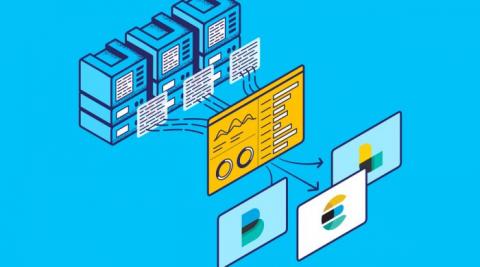
Metricbeat, an Elastic Beat based on the libbeat framework from Elastic, is a lightweight shipper that you can install on your servers to periodically collect metrics from the operating system and from services running on the server. Everything from CPU to memory, Redis to NGINX, etc… Metricbeat takes the metrics and statistics that it collects and ships them to the output that you specify, such as Elasticsearch or Logstash.

All together now: Bringing your GKE logs to the Cloud Console

Troubleshooting an application running on Google Kubernetes Engine (GKE) often means poking around various tools to find the key bit of information in your logs that leads to the root cause. With Cloud Operations, our integrated management suite, we’re working hard to provide the information that you need right where and when you need it. Today, we’re bringing GKE logs closer to where you are—in the Cloud Console—with a new logs tab in your GKE resource details pages.